GCUC UK Blog
GCUC UK London 2026 Recap
- Events
- GCUC London
- Industry
Ten years ago I joined a brand new coworking space in Brighton as part of the opening team. I didn’t really know what coworking was. I just knew the people there were different. They wanted to share. They wanted to help each other win.
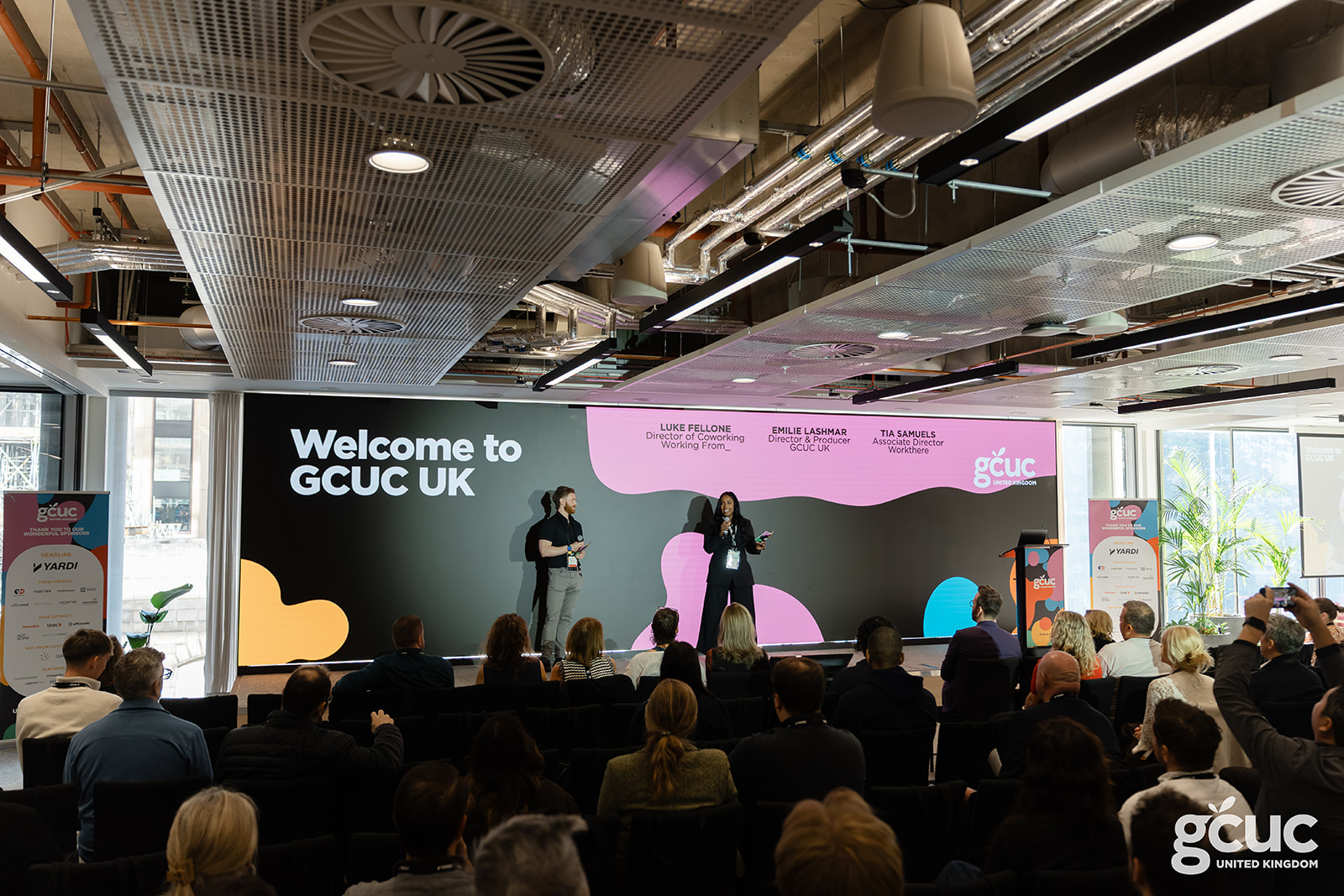
On 8 October, 250 of us filled the Pavilion at TOGETHER, 88 Wood Street, for GCUC UK London. This one felt personal, because TOGETHER is my other work home. The brief for the day was simple. Be honest about what’s hard. And find out what you have in common.
Our MCs from the Future Leaders of Coworking, Tia Samuels (Workthere) and Luke Fellone (Working From_), opened with a show of hands. Is coworking a real estate business or a hospitality business? Is AI going to transform what we do, or is it overhyped? Is community a competitive advantage, or just an expectation now? And who actually knows the difference between serviced and managed?
Not many hands went up for that last one. By the end of the day, we had much better answers to all four.
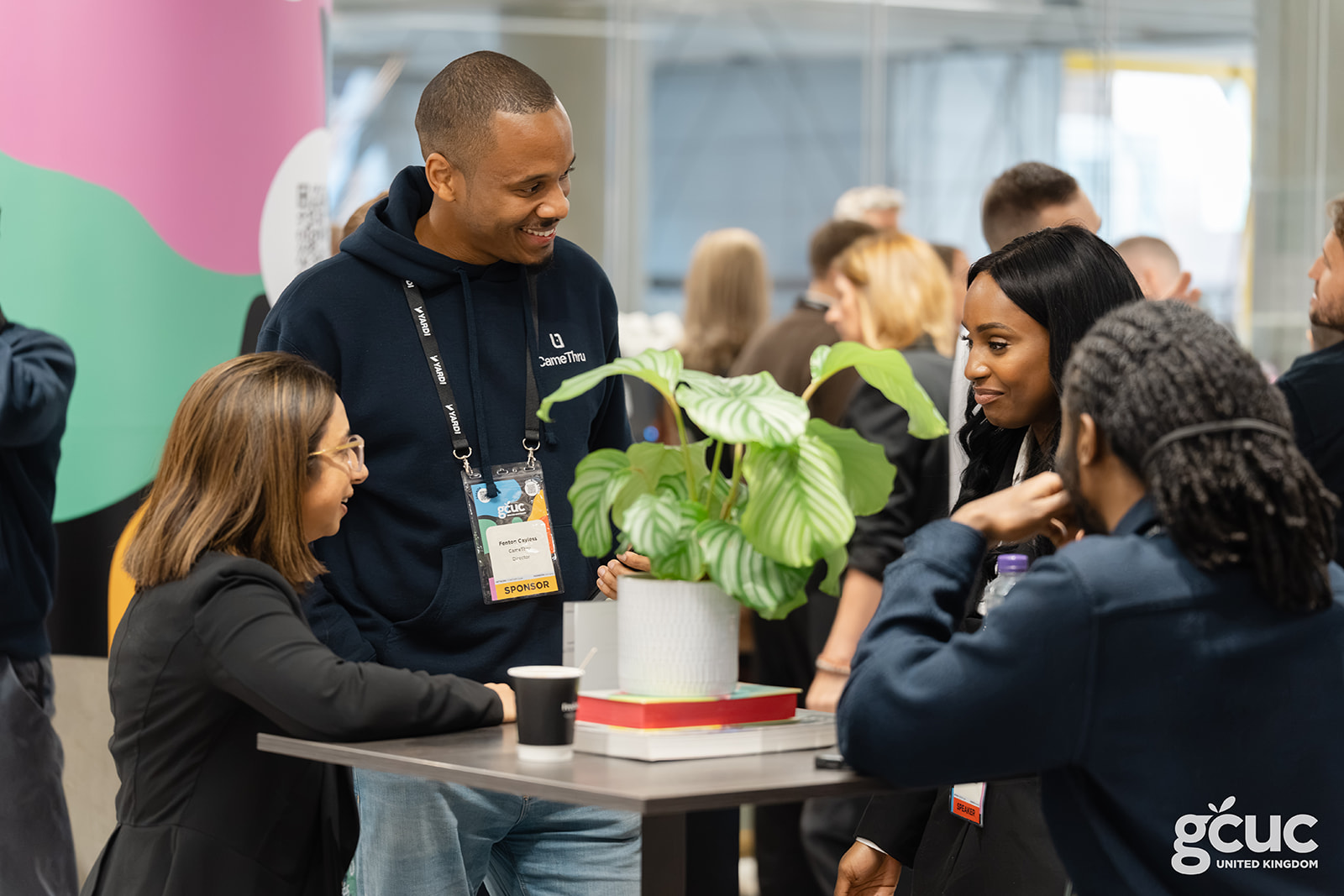
Before the first panel, Fenton Calis, founder of CameThru, invited everyone to join the room’s connection layer, so you could see who was there and stay in touch after you went home.
Before the first panel, Fenton Cayless, founder of CameThru, invited everyone to join the room’s connection layer, so you could see who was there and stay in touch after you went home.
One conviction, not ten definitions
Ask ten operators what they do and you’ll get ten answers. Adam Penny, CEO of The Beautiful Truth, opened the day by arguing that the fix isn’t a sharper tagline. It’s conviction. Story is strategy, and it has to be lived inside a business, not just told outside it. He called this “story being”.
He walked us through the handful of plots that every story falls into, and suggested ours might be the quest: a community that can do something remarkable if it comes together. Then he gave the room two questions. What does our industry exist for? And what story do I want to tell within it? The room got very loud, very fast.
Steady growth. Solid foundations.
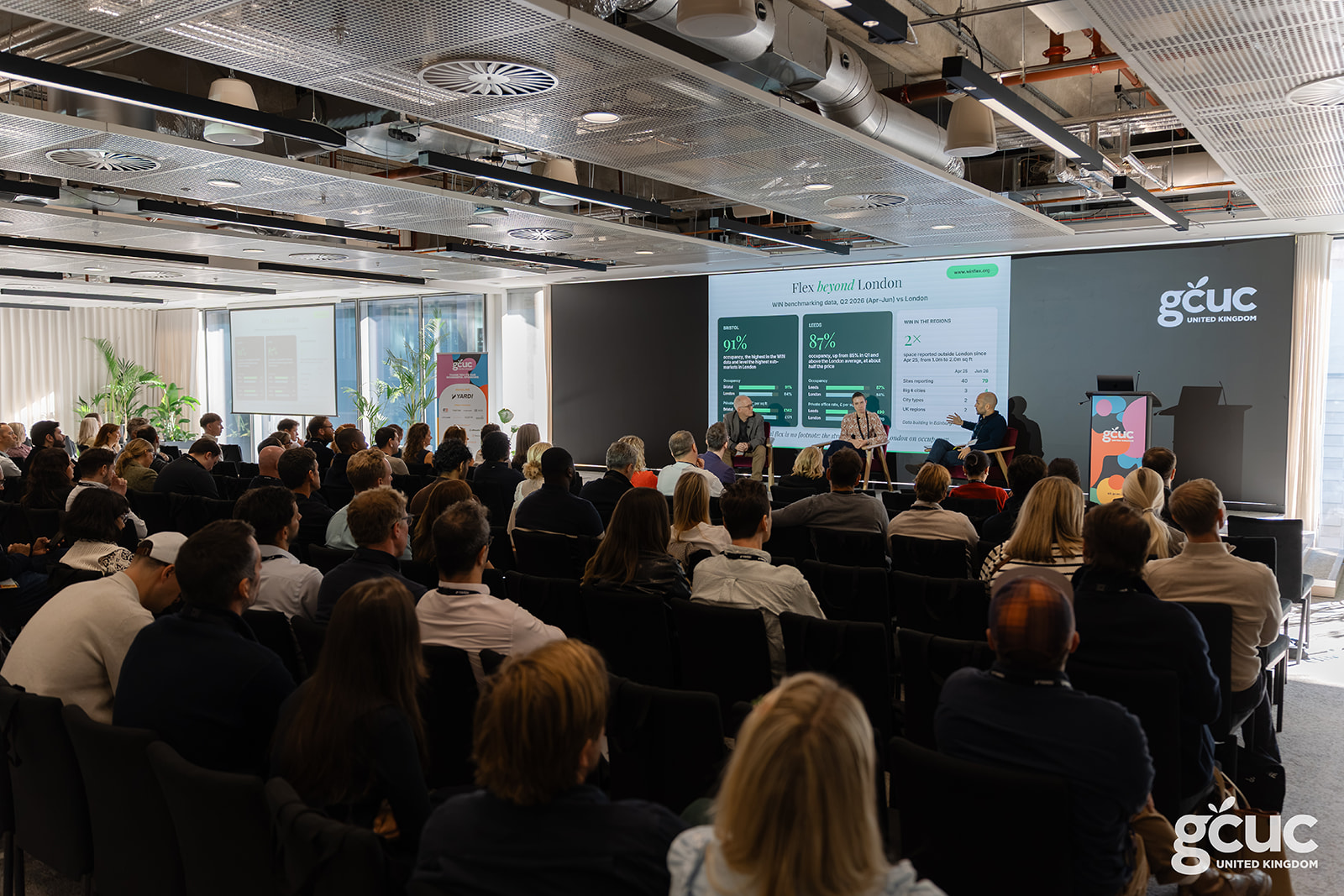
The Workspace Intelligence Network started life at GCUC UK, when operators were challenged to share their numbers. It was presented in 2025. This year, it came back to report, one year on. Jonathan Bevan (Techspace), Becky Gardiner (Fora) and Jonny Rosenblatt (Spacemade) shared how WIN has grown to 42 members, more than 400 sites and over 11 million sq ft. Fora is joining too, adding close to 3 million sq ft more.
The headline was resilience. London occupancy held at 84%. Total site revenue held flat. Midtown absorbed a wave of new supply and operators held their rate. Outside London, Bristol is running at 91% occupancy and £142 per sq ft. Leeds sits at 87%, but at £90. Strong regions, strong in different ways. Their one ask of the room: submit your data on time.
Real estate until the doors open
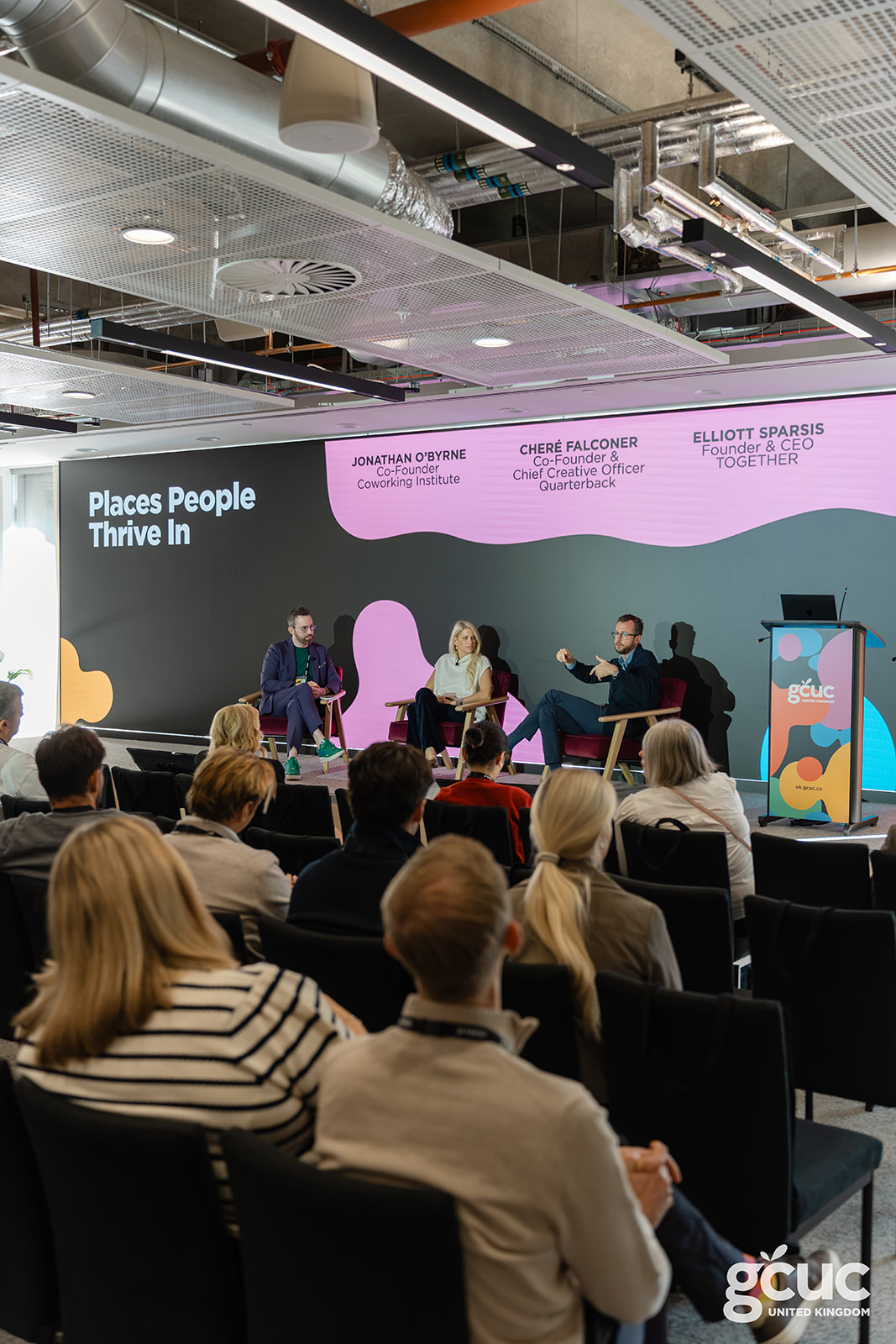
Elliott Sparsis, founder of TOGETHER, and Cheré Falconer of Quarterback, who designed and built the space we were sitting in, joined Jonathan O’Byrne of The Coworking Institute. Elliott’s thesis is simple: the more artificial content the world absorbs, the more it will value physical experiences. “You can’t fake sitting in a room.”
What stood out was everything you don’t see. An air handling system that kicks in when CO2 rises, so 250 people stay sharp all day. Columns and doors placed so each client can wrap the space in their own brand. And a curtain instead of a cloakroom door, which cut the time to get 500 people out from 35 minutes to 15. Design for the person in the room, not just the person who signs.
Elliott also answered the morning’s first question. This is a real estate business until the fit-out is done and the door opens. The minute the door opens, it’s a hospitality business. Get the real estate wrong and the next 15 years don’t work.
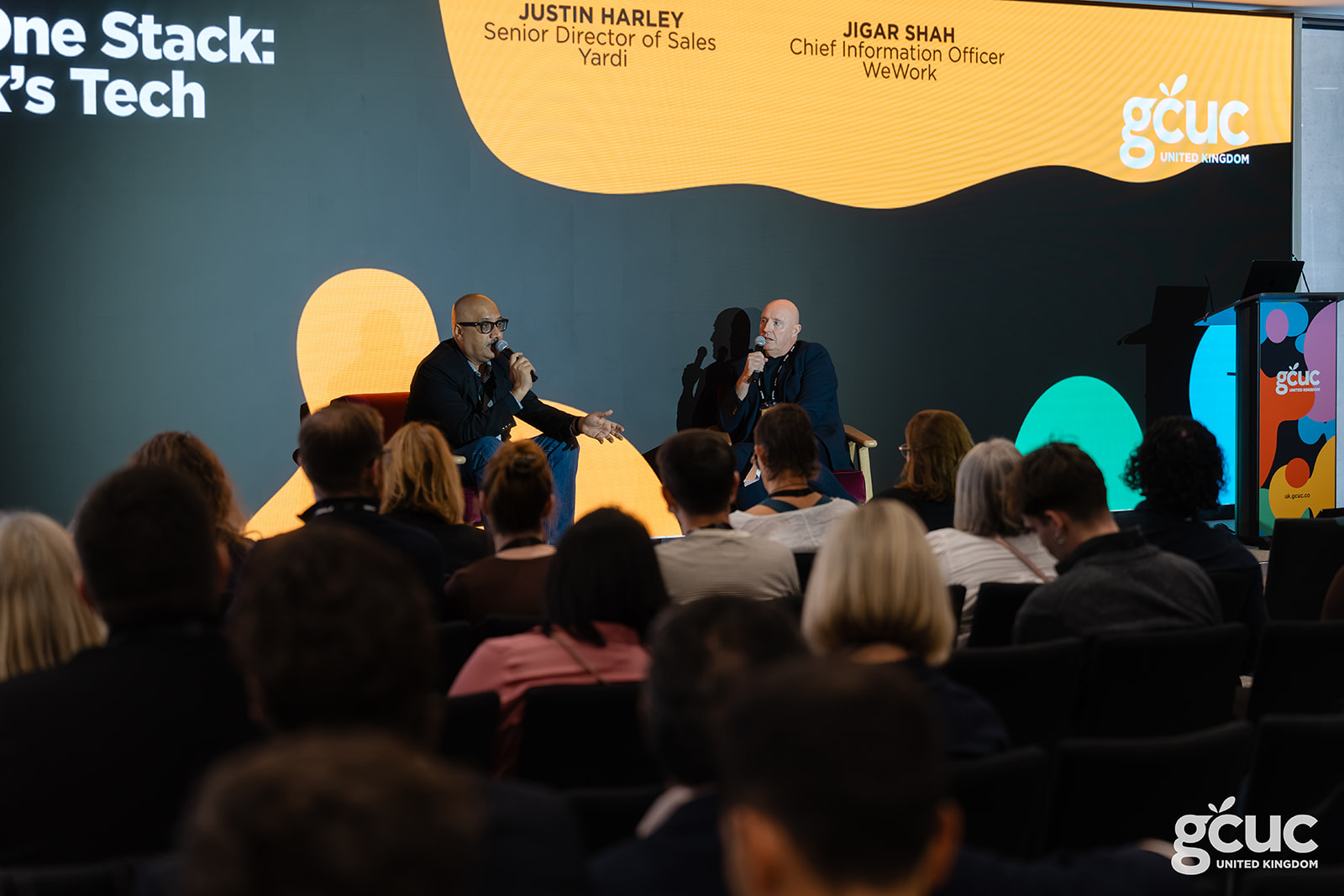
Get your data in one place
Jigar Shah, CIO of WeWork, sat down with Justin Harley of Yardi for an inside look at WeWork’s reinvention. The tech stack he inherited had around 300 applications. Within the next 12 to 14 months, 75% of its systems will be gone. The consolidation is already saving 2% of revenue a year, and WeWork is profitable for the first time in its 16-year history.
The surprise was how little time they spent on AI. For almost three years, the focus was simply one system and one source of truth. AI only becomes useful once the data underneath it is clean.
From doom to bloom
Chaired by Michelle Andrew and brought to us by NCG, this panel took on wars, budgets, interest rates and AI. Thomas Proctor (NCG), Catherine Le Druillenec (Knotel), David Kaiser (Oneder) and Ben Cheriton (BLOCK) agreed that uncertainty is exactly when flex earns its keep. Occupiers don’t want ten-year leases when they can’t see two years ahead.
Ben told the story of a £6 million raise that collapsed on the morning of a gloomy budget announcement, and closed with a new investor nine weeks later. Catherine named the problem behind the morning’s hand-raise: we confuse occupiers with our own language. And David reminded us that landlords are customers too.
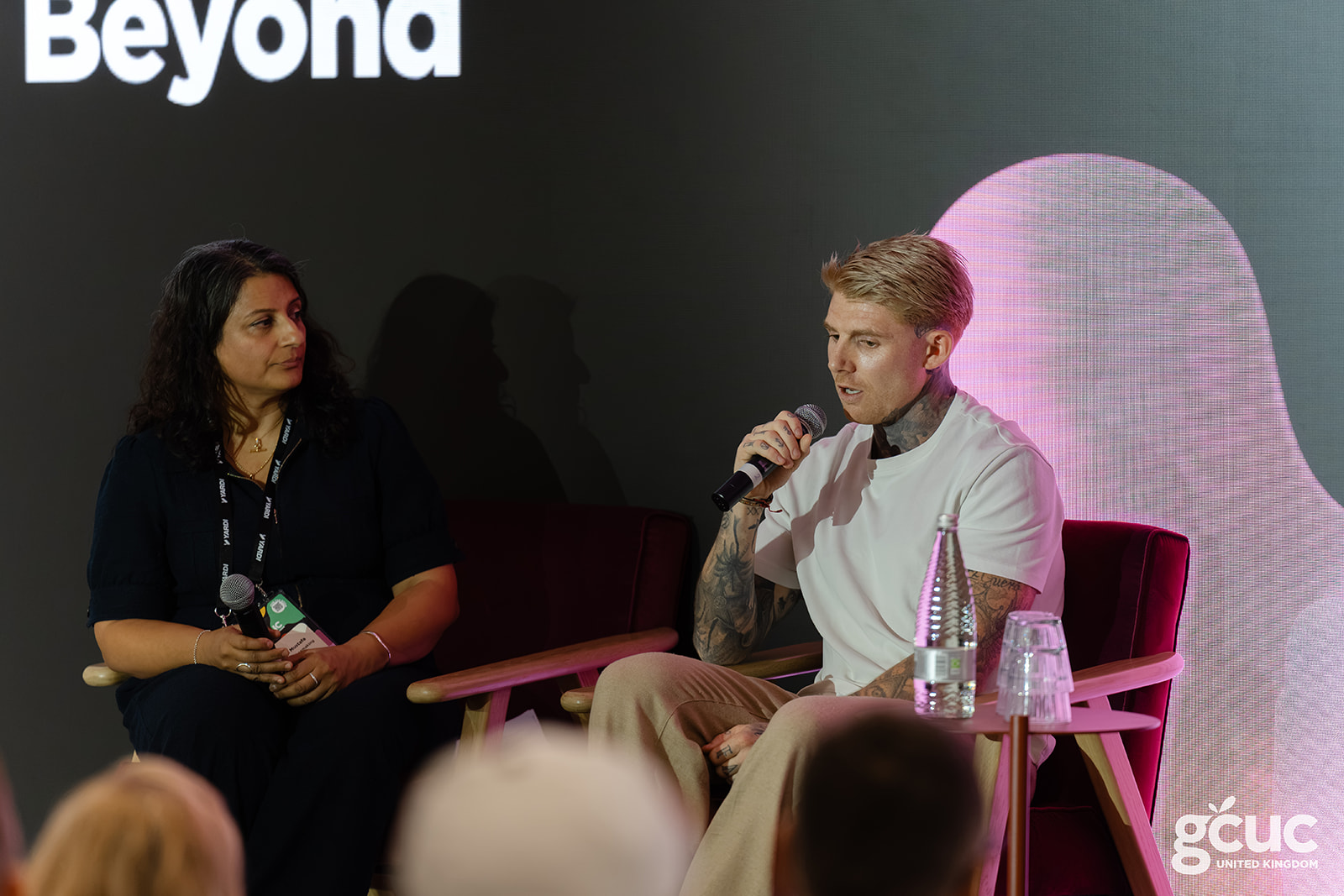
Same playbook, different rules
Shazia Mustafa, who founded a coworking and childcare business 18 years ago, brought together three people building belonging outside our industry. Loui Blake is building Long Lane, a wellness members’ club in West Sussex, in public. Jennifer Sutcliffe runs The Working Mums Club, a nursery with coworking on site. Amin Hamzianpour runs Qube, a clubhouse for the creator economy.
The common thread was knowing your customer so well that decisions get easier. Qube turns down more than half of the people who apply. Loui let his audience vote on his gym layout. Jennifer pivoted from a crèche to a nursery after listening to parents. As Shazia put it, going niche won’t be niche for long. It’ll be expected.
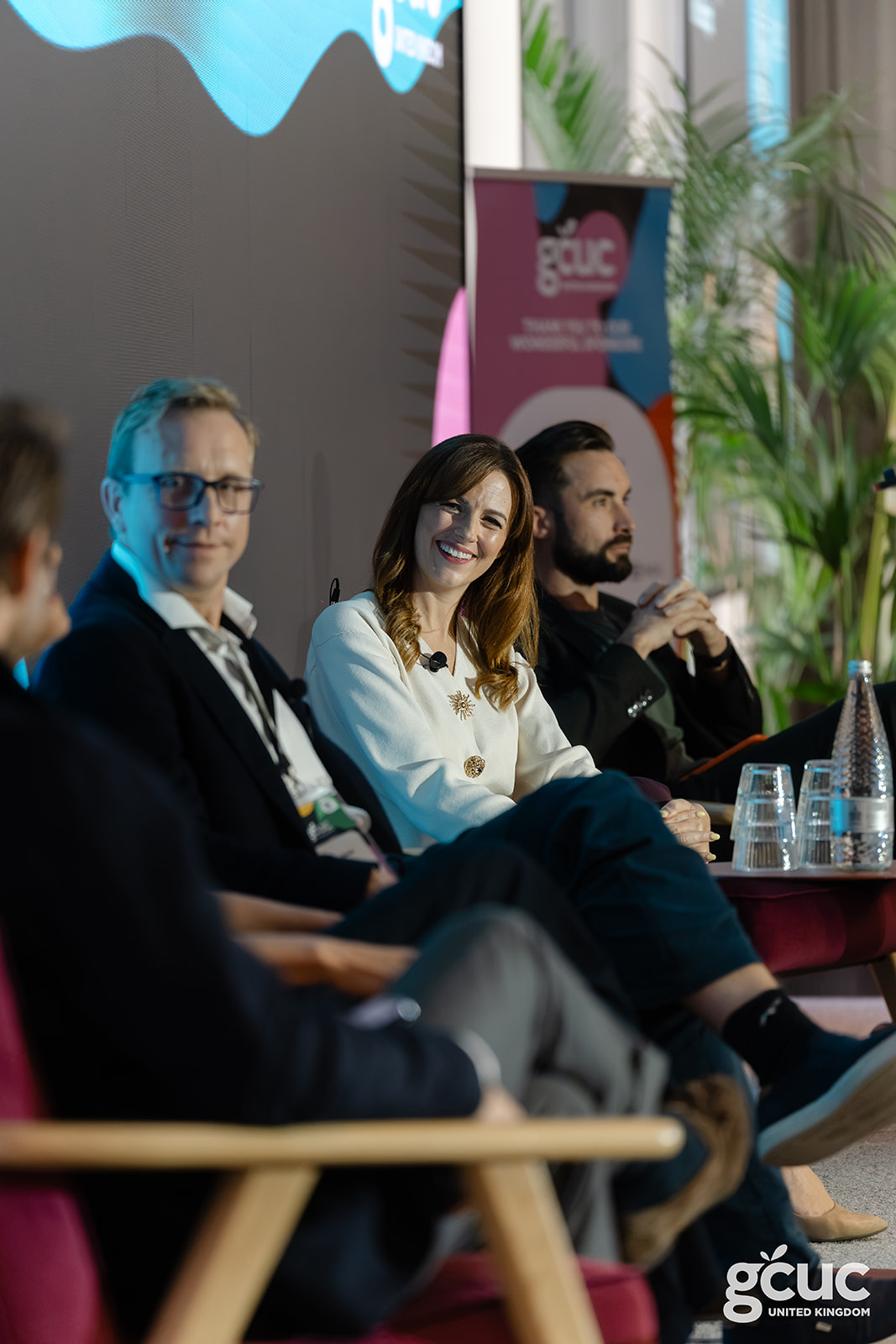
Five CEOs, no script
Chris Davies (Uncommon), Natalie Lovett (WeWork), Rupert Dean (x+why), Emily Smith (Argyll) and Jamie Apostolou (Second Home) took the stage with no agenda and no questions. It was the most honest half hour of the day.
Jamie described taking Second Home from seven sites to three: “Turnaround is not one big decision. It’s hundreds of really uncomfortable ones.” Emily talked about surviving the dot-com bust, the financial crisis and COVID by taking the right buildings and controlling costs. Chris pointed out that the press ignores every deal under 5,000 sq ft, even though that’s where most businesses live. And they disagreed, openly, about management agreements.
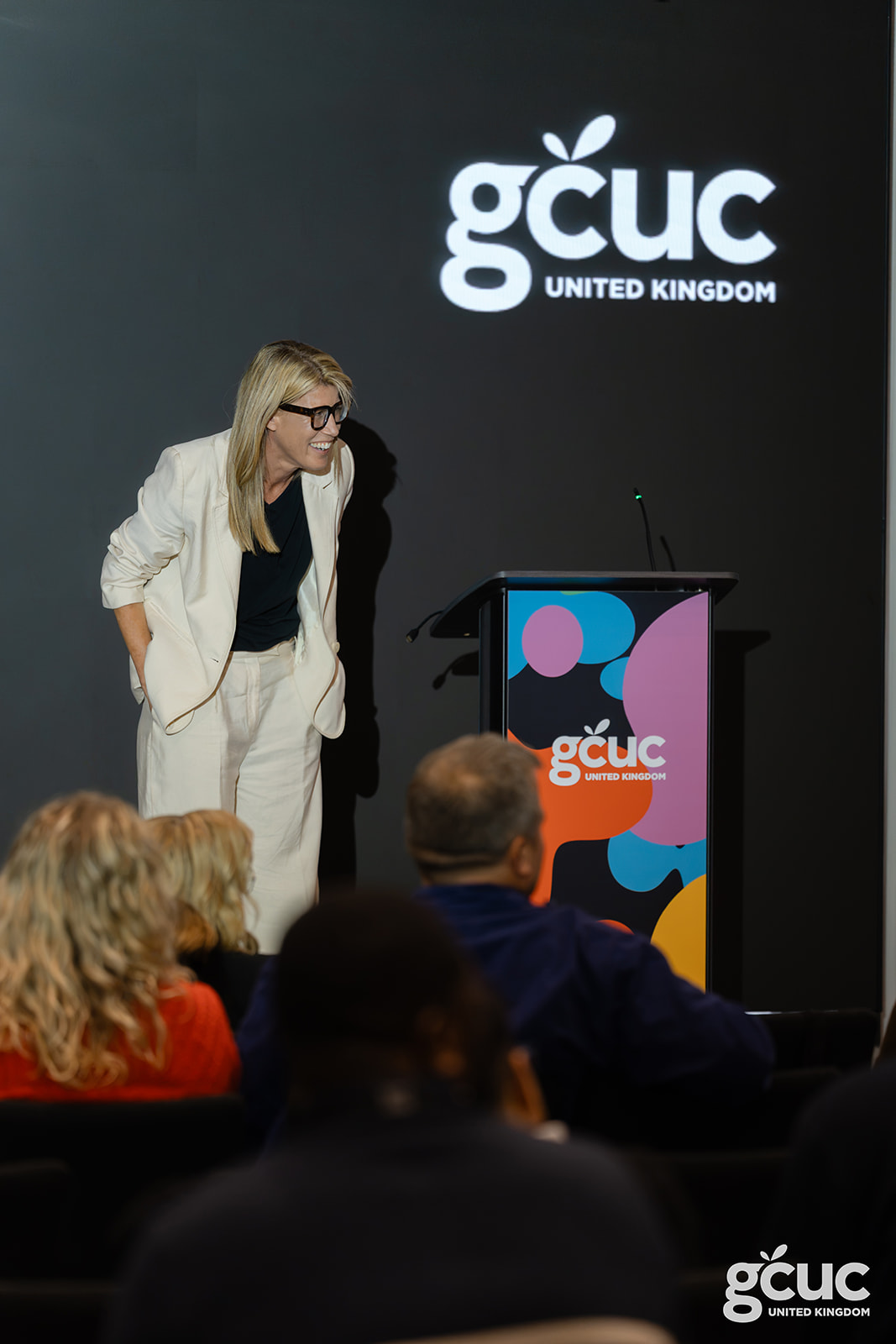
Community is a revenue line
Pip Jamieson, founder of The Dots, gave our closing keynote. Her company powers the private networks behind Soho Works, x+why and many more. Her message: community is not a nice to have. It drives retention, footfall and revenue, and she has the numbers to prove it.
Her advice was to hire a proper community curator before you even think about an app. Let members run events. Stop handing your engagement to WhatsApp. And remember that a digital tool can grow a community. It can’t create one.
A greater purpose
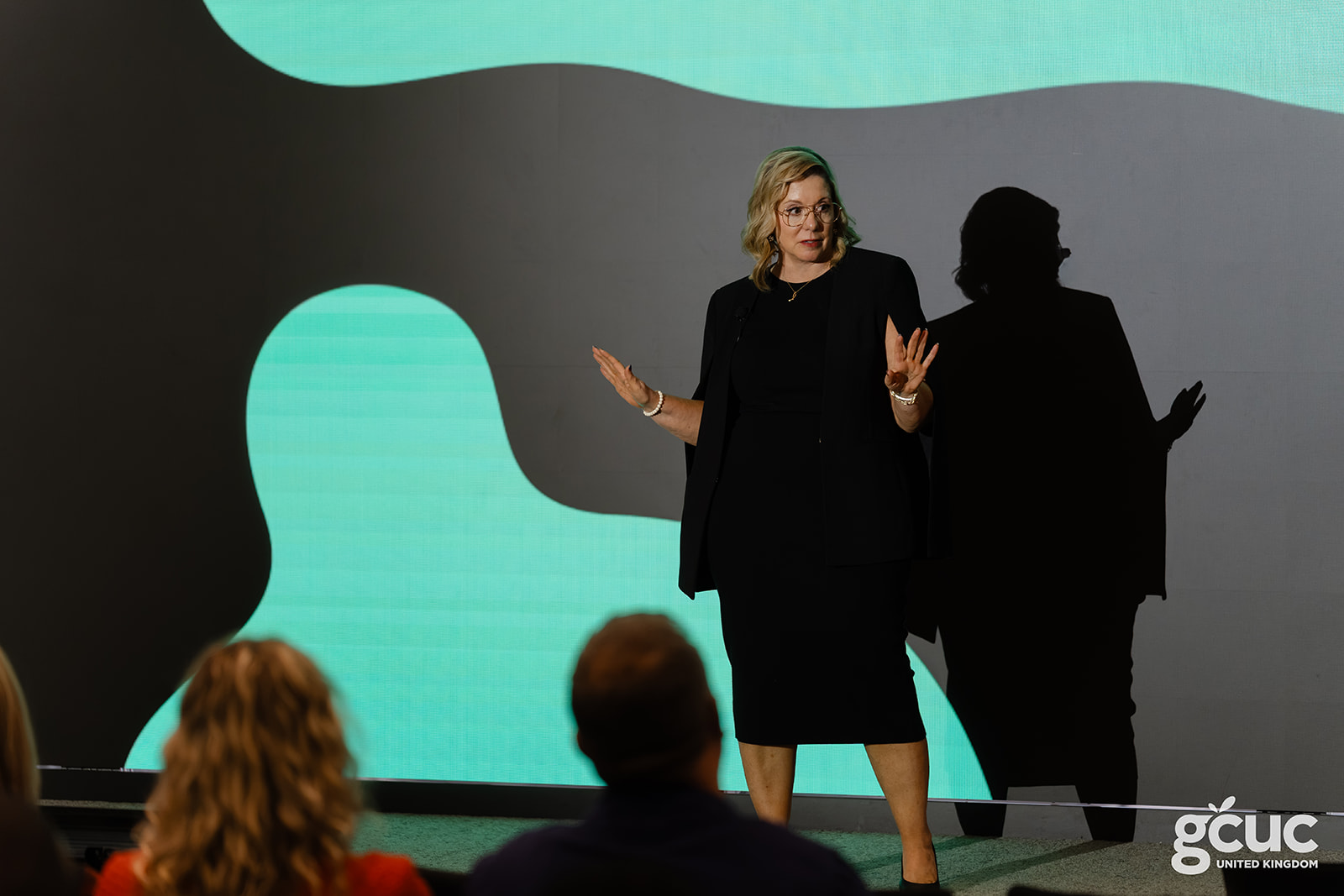
To close, GCUC founder Liz Elam and Adam Walker of Foundry asked something bigger of the room. Liz launched GCUC Access, a challenge for every operator to offer free mental health support to everyone in their space, not just their staff, within a year. Adam shared how Foundry is doing it, through its People, Place and Pathways programme, and promised a free, unbranded guide for the whole industry at GCUC Miami in April.
WeWork, x+why and The Commons have already signed up. Plenty of hands went up in the room too.
So, what did we decide?
Is coworking real estate or hospitality? Both, in that order. Is AI transformative? Only if your data is in one place first. Is community an advantage? It’s a revenue line, if you resource it properly. And serviced versus managed? We still have work to do on how we explain ourselves. That’s on all of us.
And then the rest of it
The afternoon split into workshops and roundtables in the Collective, hosted by Nathan Bisnouth, Founder of WITHIN Workspaces:
- The Switching Problem: Why your most valuable flex members are the most likely to leave, with Mita Bedi, CEO and Co-Founder of Resonate CX
- You Sell Flexibility. How Flexible Is Your Fit-Out?, with Warren McGrath, Market Lead UK at NORNORM
- No Desk Required: The Virtual Office Opportunity, with Francesca Dixon, Founder of Flex AML
- The 5 Pillars that build Brain First Spaces, with Amanda Perry, Founder of BRAIN FIRST
- Beyond Community: Designing Pathways to Belonging, with Cat Johnson, Founder of Coworking Convos and Coworking Creators Lab
- AI the Mundane, Make Room for the Remarkable, with Jonathan O’Byrne, Co-Founder of The Coworking Institute
Back in the Pavilion, executive coach Claire Carpenter of Claire Carpenter Coaching and I hosted the Open Room, bringing together attendees with a wide range of backgrounds and experiences for a roundtable discussion.
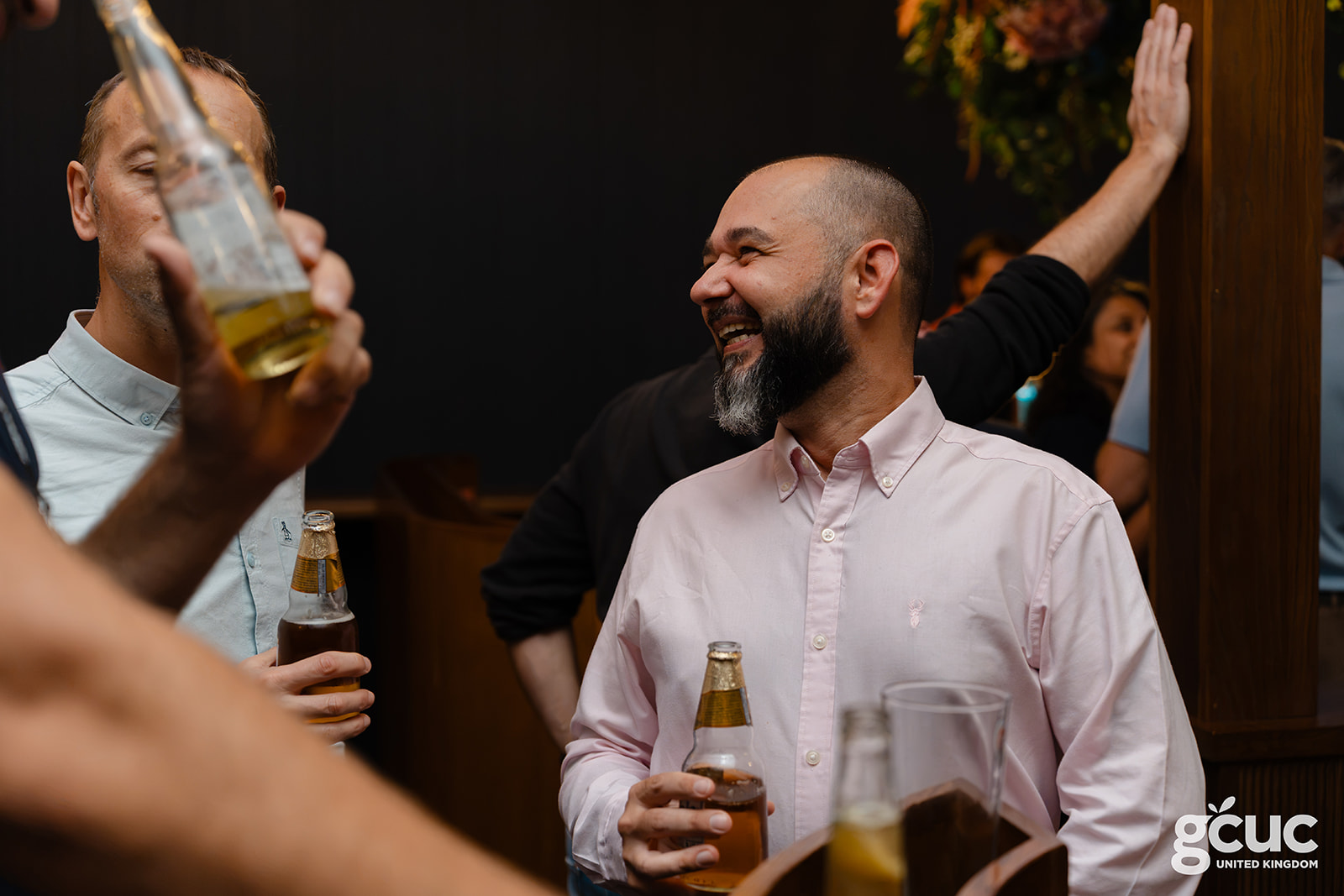
Then came the pub quiz with This Week in Coworking and FLOC, and the after-party at Clays, kindly hosted by technologywithin.
On Friday, operators opened their doors for three tours across London: x+why, Argyll and Fora around Victoria; Koba, Huckletree and The Work Project from Whitechapel to the City; and Qube, Work.Life and Mindspace in Shoreditch.
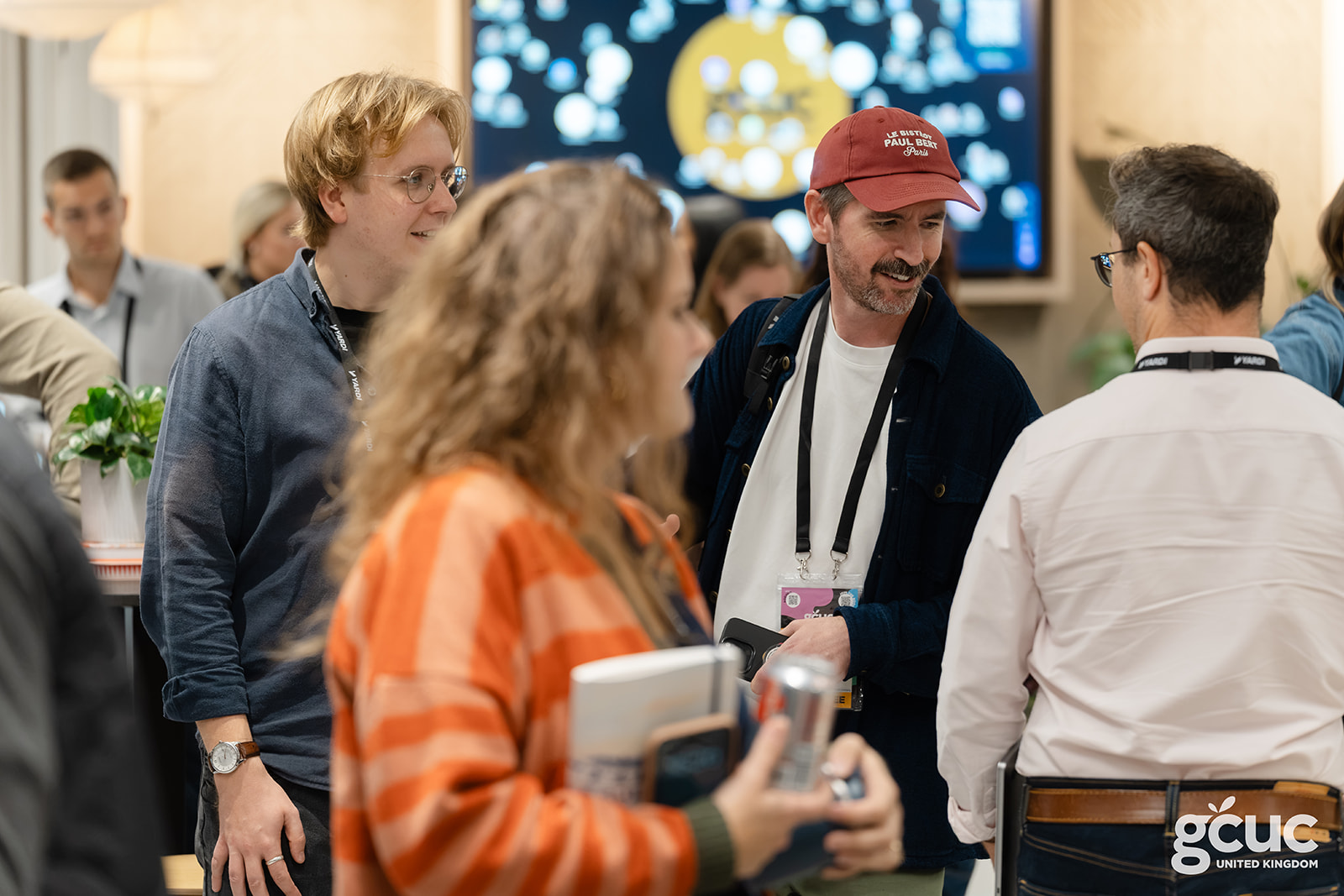
Thank you to our headline sponsor Yardi for backing us yet again, and to every one of our sponsors and partners. Thank you to every speaker who said the honest thing instead of the safe thing. And thank you to everyone who sat with someone new at the break. That really is the whole point.
Headline: Yardi
Fresh Pressed: Wavenet Connected, technologywithin, OfficeRND, Fresh Ground, NCG Global, Soundbox Acoustic and Resonate CX
Pure Extract: Nexudus, Uniti, Offcoustic, NeuroVend, NORNORM and Baseworx
Not From Concentrate: Opstech Services and Oasis Plants
Partners: Cat Johnson Co, The Coworking Institute, CameThru, This Week in Coworking, Capital Design Print and Future Leaders of Coworking

See you in Miami in April?
Emilie, Liz, Lizzy + The GCUC Team