GCUC UK Blog
“Property is just property”: Michael Ingall at GCUC UK Manchester
- Coworking
- GCUC Manchester
- Industry
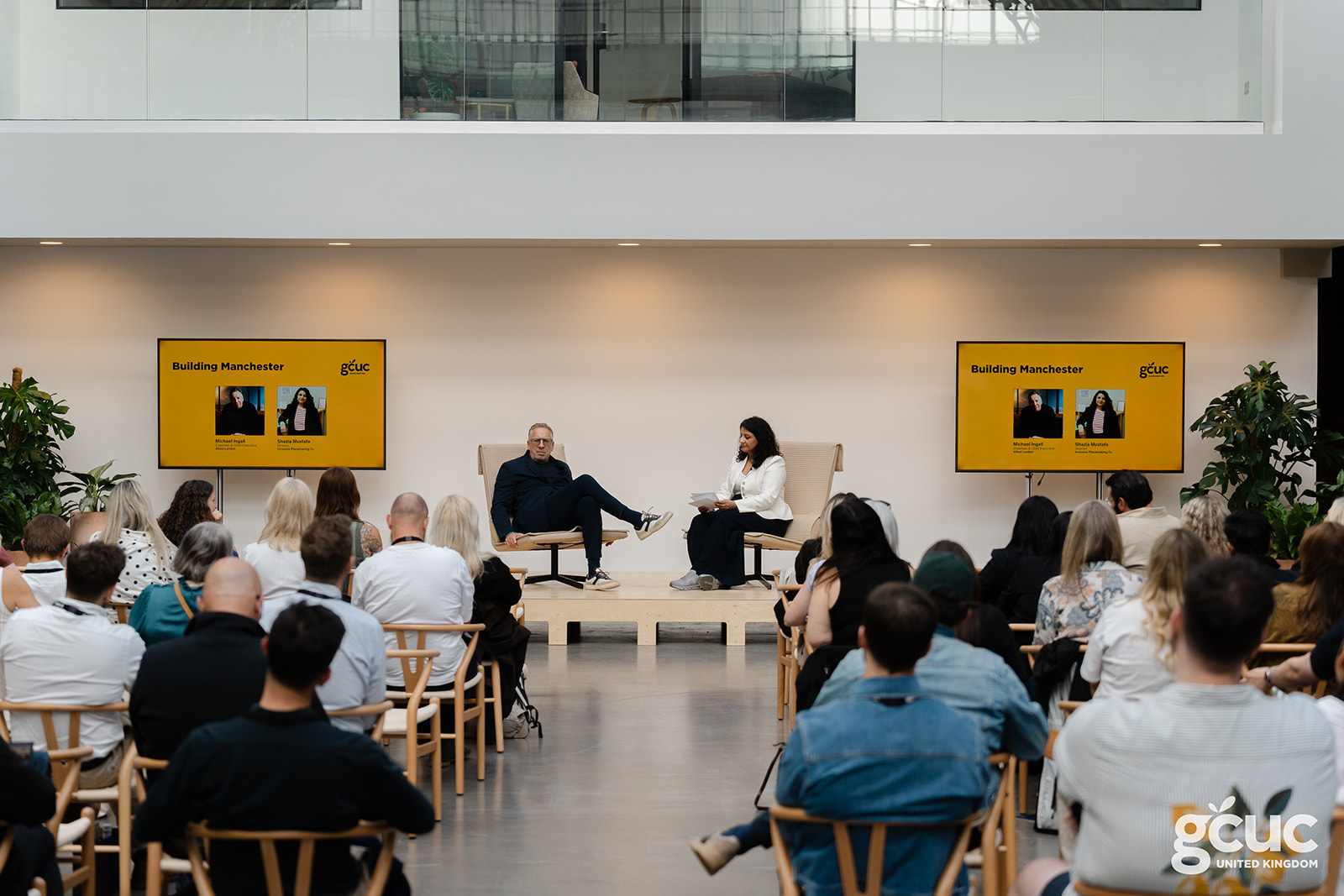
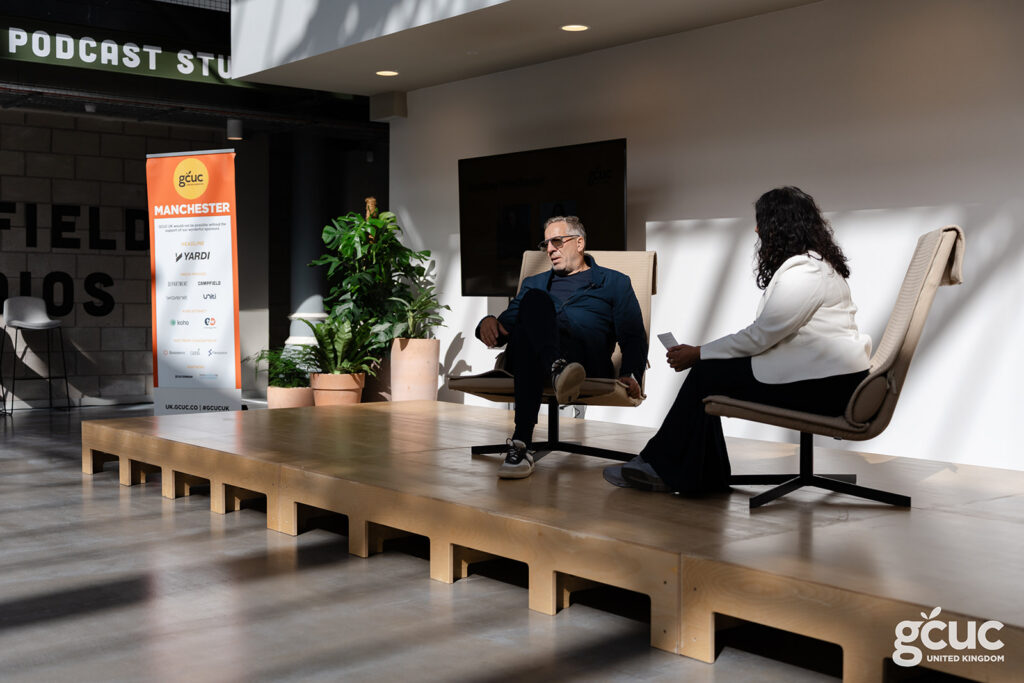
There was no better way to close the day at GCUC UK Manchester than a conversation about the city we were sitting in.
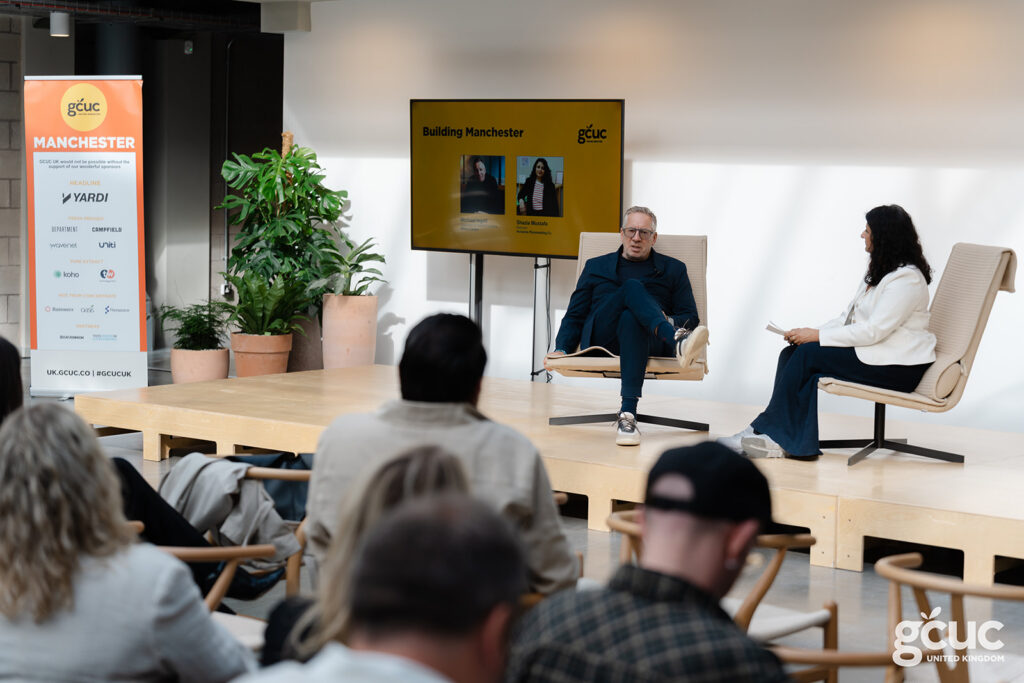
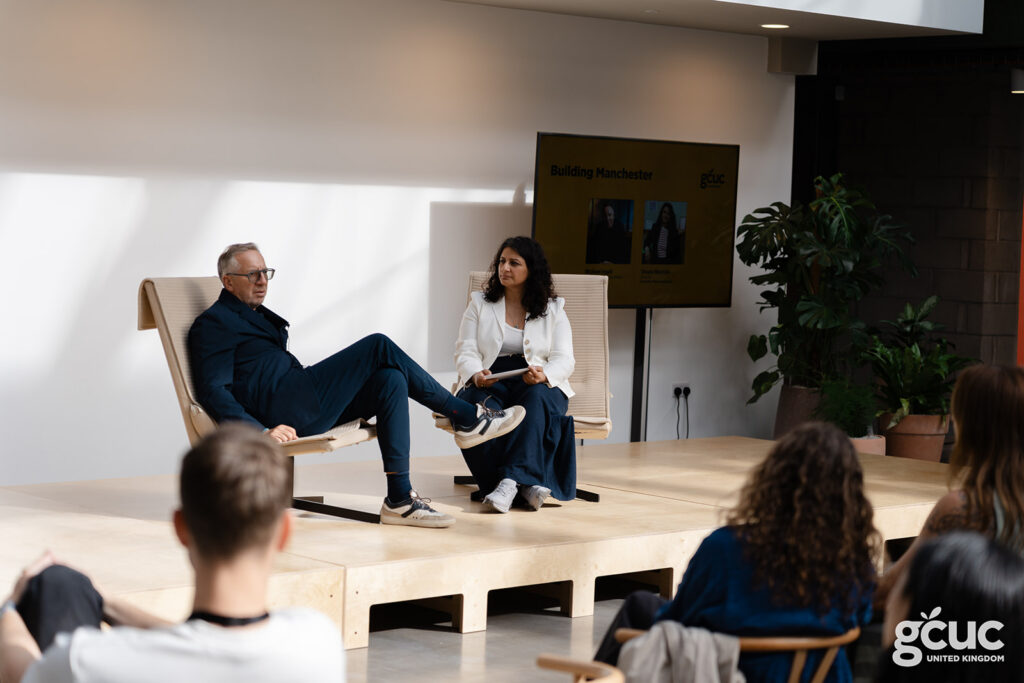
Shazia Mustafa of Inclusive Placemaking Co sat for a fireside with Michael Ingall, the developer behind Spinningfields, St John’s and the Campfield campus that hosted GCUC UK, for the closing fireside of GCUC UK Manchester. What followed was less a property conversation than a read of where cities are going and what actually makes them work.
Three bets, all read off employment
Ingall traced a career built on reading employment trends before the buildings went up.
Spinningfields was built speculatively for the regionalisation of financial services. Royal Bank of Scotland came first, at seven and a half thousand people, with Barclays, HSBC and the professional services firms following. When that market stalled in 2008, he pivoted to tech and media, building the XYZ concrete-shell flatted factory and launching the Department coworking brand in-house. St John’s continued the same play, landing Booking.com and Mediacom off-plan. Campfield is different again.
The thesis on cities
His argument is that global cities are polarising around large AI organisations, and the regions are not going to win those tenants. London will separate from the regions as it did in the 1990s and 2000s. The answer, in his view, is not to chase what the regions will not get, but to build for the employers actually present, and to get the life around the buildings right.
“Global cities are polarising, all driven by massive AI organisations. I don’t believe we’re going to get those tenants into the regions, so the regions are going to have to work very, very hard.”
Hence Campfield as a media campus and startup-and-scale-up incubator rather than another food market a city already has. The weekend artisan market, the public cafe, the free accelerator running fifteen cohorts every six months, the free desk access for local postcodes — none of it incidental.
The Medellín lesson
The model he kept returning to was Medellín, Colombia, a city that transformed itself through a ring of twelve public-private neighbourhood libraries.
“The importance of the spaces around buildings is often more important than the buildings. They didn’t just build a building, they activated the space all around them.”
It is a pointed frame for a property developer to reach for. The building is the vehicle. The life around it is the point.
Owning the whole ecosystem
Allied London now runs property management, security, cleaning, architecture, film and TV studios, Department and hospitality in-house. The reasoning was blunt: he could not get the customer service he wanted from third parties. The only way to make Spinningfields work as he wanted it to was to manage it himself, down to scraping gum off the pavement on Saturday mornings.
What makes a city
Asked what advice he had for people starting out, his answer was unsentimental. Focus on what is at your feet. Too many people miss the opportunity sitting right in front of them. If you are creating impact and delivering value, the money will follow.
And then the line that closed the day.
“Property is just property. Employment is what drives a city, employment and health.”
For a developer who has built more of Manchester than almost anyone alive, it was a pointed thing to say. The buildings are the easy part. What makes a city is the work that happens inside them and the life that happens around them.
GCUC UK returns to London on 8 & 9 October at TOGETHER, 88 Wood Street.