GCUC UK Blog
CameThru: The Live Networking Tech Coming to GCUC UK London
- GCUC London
- Sponsors & Partners
- Tech
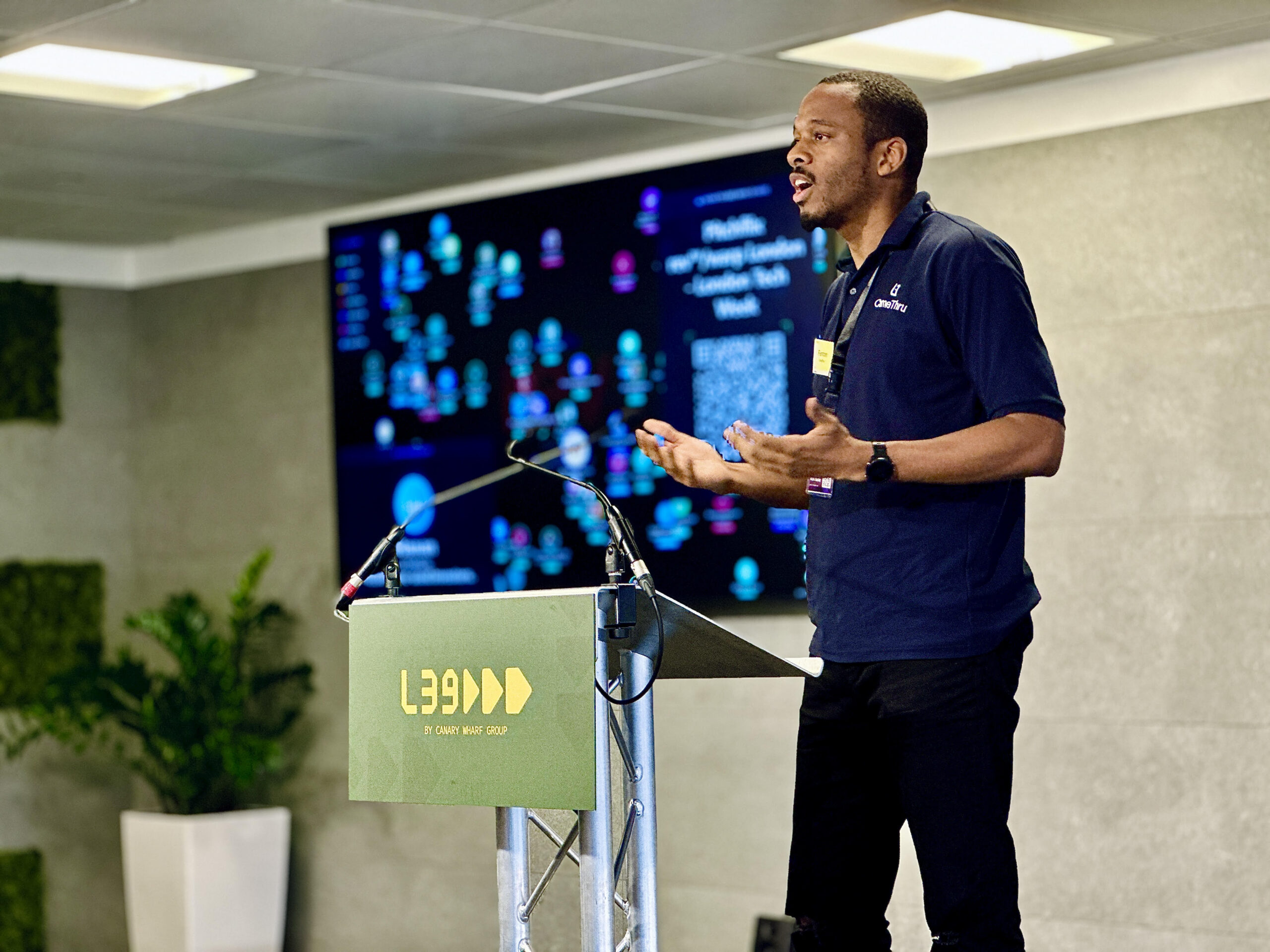
“Networking has traditionally been measured by how many introductions or conversations happened. I am much more interested in whether we helped people have better conversations with the right people and whether the value of the room can continue after everyone has physically left it.”
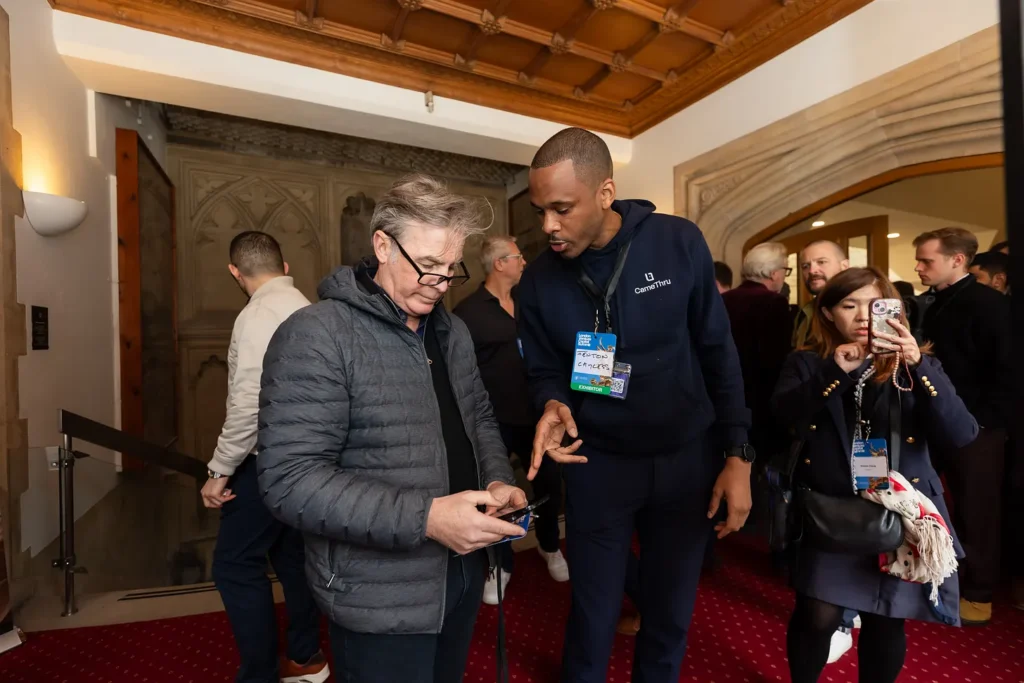
CameThru is building a live network map for events, on screens in real time, so people can see who’s actually in the room instead of guessing. It’ll be live at GCUC UK London on 8 October. Ahead of the event, we asked founder Fenton Cayless how it works, what it’s already done at two live rollouts, and what to expect at 88 Wood Street.
The problem is the room, not the people
You’ve said the problem is the unstructured room, not the people in it. What does that actually look like in practice, and what’s happening, or not happening, at a typical event that CameThru is trying to fix?
“I don’t think most people are bad at networking. I think we put people into badly designed environments and then expect them to somehow work everything out for themselves. You can have 300 genuinely interesting people in a room, but when you walk through the door, what information do you really have? You can see what somebody looks like, you might see their company on a badge, and beyond that you are largely guessing.
That means people naturally make assumptions. They speak to whoever is standing nearest to them, somebody who looks familiar, somebody they already know, or somebody they assume is relevant to them. The more confident networkers tend to work the room, while everyone else relies heavily on chance. I have also experienced the other side of that myself, where people can make assumptions about who you are before they have actually spoken to you.
One of the things I wanted CameThru to change was that dynamic. If you can see what somebody does, what they are working on, why they are there and what they are looking for before approaching them, you are making that decision with context rather than appearance. The right people are often already in the room, but the infrastructure for finding them usually is not, and that is the gap CameThru is trying to fill.
The other big problem is that once the event finishes, you effectively lose the room. You might have spent three hours surrounded by people who could have become customers, collaborators, investors, suppliers or friends, but if you did not happen to cross paths with them during that short window, the opportunity is gone. For me, one of the biggest things CameThru provides is the ability not to lose access to the room you have already spent all that time and money bringing together.”
Built by an introvert
You’re an introvert who built a networking product. That sounds like it should be a contradiction. How has that shaped the way CameThru works, and is there anything about it you built specifically because you’d want it yourself in a room full of strangers?
“It is probably exactly why I built it. If you put me in a room with 500 people and tell me to go and network, I am not naturally excited by that, but if you tell me there are three people in that room I should meet, show me who they are, what they are working on and why we might have something useful to talk about, the experience feels completely different.
A lot of networking products seem to have been designed around people who already enjoy networking, whereas I wanted CameThru to work for the person standing at the edge of the room wondering who they are actually supposed to speak to. That is also why CameThru is completely opt in. Just because somebody walks into an event or a coworking space does not mean they should automatically become part of an attendee directory. They choose whether they want to be visible, and they choose what they want other people to know about them.
The interesting design challenge then becomes how you create something people genuinely want to opt into. I am much more interested in creating curiosity and FOMO than telling people to download another app, register for another platform or scan another QR code. Nobody attends an event because they are excited about scanning a code. I want somebody to look up at a screen, see this live network forming around them, notice interesting people and companies appearing, and start wondering why they are not part of it yet.
For me, the best version of CameThru is when the organiser barely has to tell people to join because the experience is designed well enough that people see what is happening around them and choose to become part of it themselves. It also takes some of the pressure off the individual because you do not have to frantically work the whole room through fear of missing somebody. You can have better conversations in the moment while still knowing that, where people have opted in, you can discover the people you did not manage to meet afterwards.”
Four new members in a day, from an 80% opt-in rate
At the Oneder coworking day, 80% of attendees opted in and four converted to paid memberships on the day. Coworking operators are going to read that number and want to know exactly what happened. What does an operator need to do differently on the day to get that kind of result, versus just switching the tool on?
“CameThru did not magically sell four memberships. The operator still has to create a strong experience, but what CameThru can do is make one of the most valuable parts of a coworking space visible in a way that normally is not.
Operators naturally show people the desks and meeting rooms; the physical features of the building. However, one of the most valuable things they’re actually selling is the community already sitting inside that space. If I am considering becoming a member and I can suddenly see that there is a designer, an investor, a potential customer and somebody working on a problem very similar to mine already in the building, the value of that membership starts to feel much more tangible.
That is why the 80% opt in at Oneder matters to me. Those people were not automatically uploaded into a directory. They actively chose to make themselves visible, which tells you something about the experience itself.
It works best when CameThru becomes part of the environment. Put the live network on the screens, let people see others appearing in real time, let the community team use it as a reason to make introductions, and allow curiosity to build naturally. The organiser can also prepare the experience in advance by deciding what information they actually want people to share, what kinds of connections they want to encourage and how they want the room to be understood.
One of the biggest pressures on community teams is the expectation that they somehow need to know everyone and make all the right introductions themselves. Once you get beyond a certain number of people, that becomes impossible.
CameThru takes some of that pressure away by creating the infrastructure for people to discover one another themselves. The community team can still make the high value human introductions where their knowledge adds something, but they no longer have to be the only route through which connection happens.”
What the networking app category has got wrong
Attendee networking tools have been around for years, and many people have a slightly weary relationship with them. What do you think the sector has got wrong about this problem before now, and what makes CameThru different?
“The industry has spent years trying to put the physical event inside the phone, another app, another account, another profile to fill in, while encouraging people to spend the day looking down at a six inch screen instead of at each other. That has always felt slightly backwards to me.
My background before CameThru was IT infrastructure and programme management, and around a decade at Capgemini with organisations including HSBC, Rolls Royce and Smart DCC. Because of that, I think about CameThru less as another event app and more as a separate, optional layer of live infrastructure.
An operator might already have a member app, a CRM, an event platform or another system that works perfectly well for what it was designed to do, and CameThru doesn’t need to replace any of that. It can sit completely separately, it does not need to connect into their internal IT, and from an operational point of view it can be incredibly lightweight. It is there as a passive, optional layer.
People opt in because they see something happening around them that feels useful, interesting and alive. The network is on the screens, people are appearing in real time, and that creates curiosity and FOMO in a way that telling someone to download another app never really can.
The feedback we have had has been amazing. People are not being asked to adopt another piece of software as part of their day. They are being given a way to understand the room they are already standing in and, importantly, a way of not losing access to that room once the physical event is over.
For me, good infrastructure supports what is happening around it without constantly demanding attention, and that is how I think about CameThru. It is completely optional, but when people choose to use it, it can fundamentally change how they experience the people around them.”
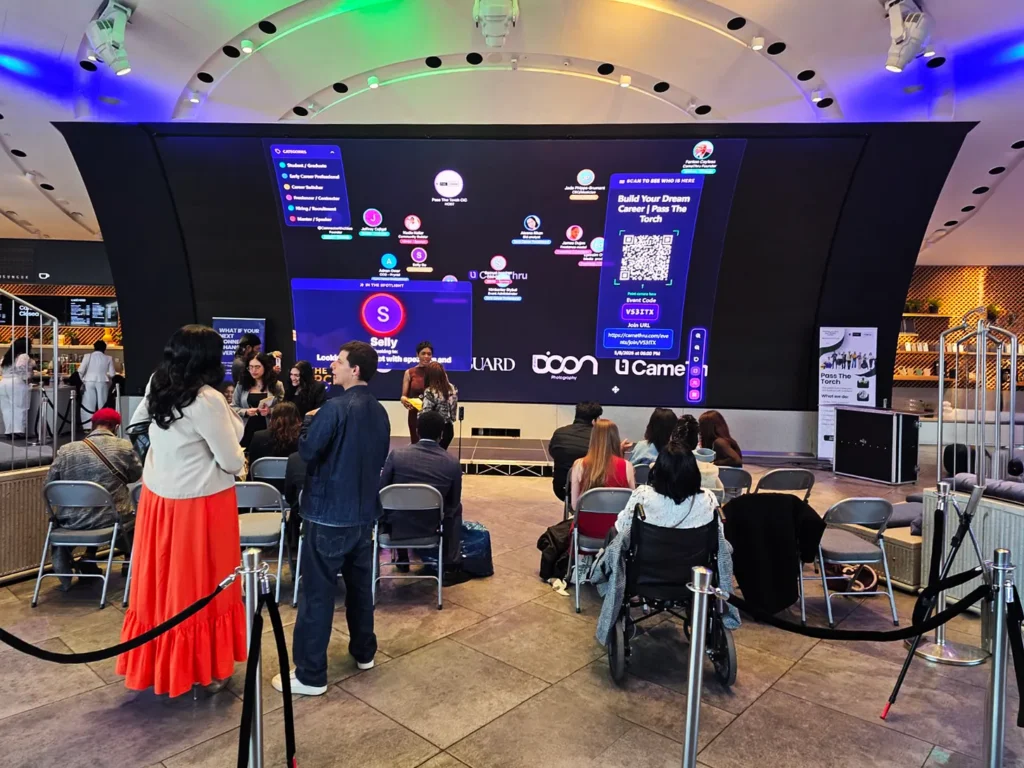
At the London VC Summit you saw 12,990 profile views and 264 confirmed meetings from 658 people. What does a confirmed meeting actually mean there, and what did that data teach you that you didn’t expect going in?
“A confirmed meeting means more than somebody clicking on another person’s profile. One person has actively requested to meet somebody and the other person has actively accepted that request, which is important because there is a meaningful difference between finding somebody interesting and both people deciding that they actually want to have a conversation.
What stood out to me at the London VC Summit was the scale of discovery taking place. There were 12,990 profile views, thousands of link clicks and more than a thousand meeting requests. That reinforced something I had suspected for a long time: people do not really have a networking issue. They just don’t have a method to connect at the time they need to the most which is before the event even begins.
Once you make the room understandable, people become incredibly curious about each other. They want to know who is there, what they do and whether there is a reason to speak. Not every profile view needs to become a meeting to have value either, sometimes it’s just as useful to realise someone isn’t the right conversation and move on.
The other thing it reinforced for me is how unrealistic it is to expect an organiser to manually create all of those connections. But what they can do is create the right environment, prepare the information people need and then give attendees the infrastructure to navigate the room themselves.”
On 8 October, CameThru will have the live network map up on screens around 88 Wood Street. What will people actually see, and what’s the one thing you want a coworking operator watching that screen to walk away thinking?
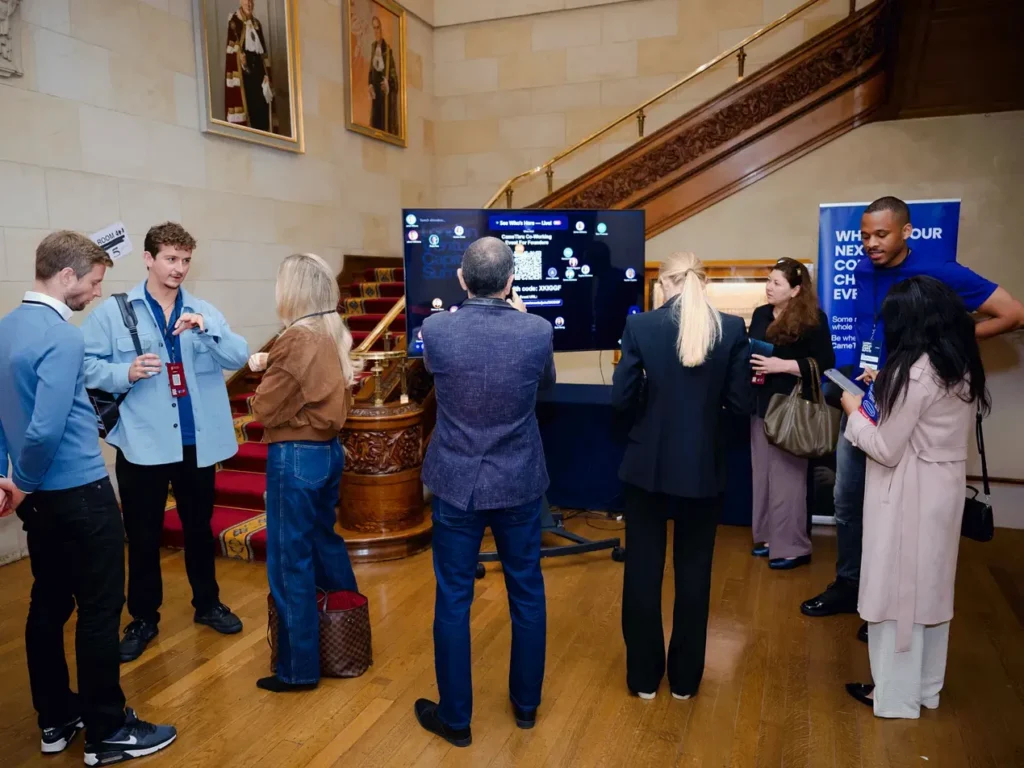
“People will see the community appearing in real time. As individuals choose to opt in, they become part of the live network and other people can begin discovering who is there, what they do, what they are interested in and where there may be a reason to connect.
Somebody walks past, sees people appearing, recognises a name or a company, starts wondering what they’re looking at, and eventually realises they can become part of it themselves. That’s a completely different interaction to a QR code on a poster because the screen itself starts to create the FOMO.
If I’m an operator watching that happen, the question I want left in my head is why all of these people can be inside my building every day without necessarily being visible to one another. Coworking has spent years investing in physical infrastructure, from desks and meeting rooms to hospitality, connectivity and event spaces, but there is a huge opportunity around social infrastructure.
The question is how you make the knowledge, skills, relationships and opportunities already sitting inside a community visible to the people around it, without expecting the community manager to manually broker every single relationship. The operator should be able to prepare the environment for connection, make the community understandable and then allow members to discover value in one another themselves.
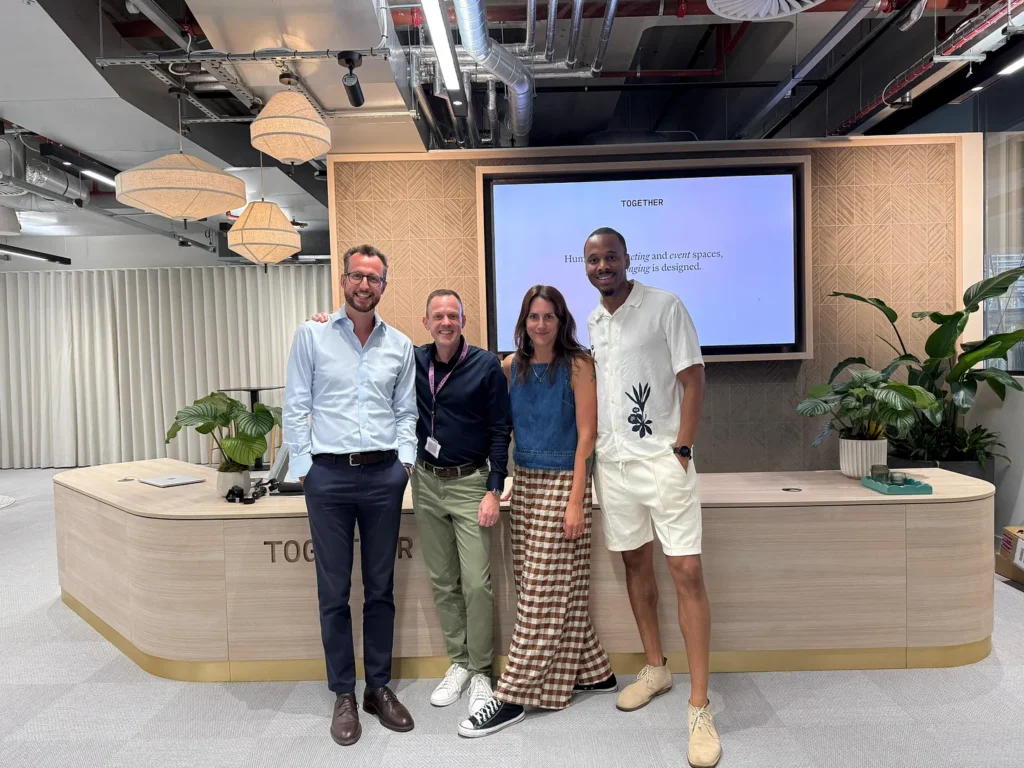
Elliott and Declan, Co-founders of TOGETHER. Emilie Lashmar, GCUC UK and Fenton Cayless, CameThru at TOGETHER
Off the clock
When you’re completely off the clock and away from CameThru, how do you like to unwind?
“I like quieter environments, but I am also a huge advocate for taking care of your physical and mental health, and running is a big part of how I do that. My mind is constantly loaded with ideas and I naturally enjoy problem solving, so running gives me the space to clear my head, think things through and reset.
I also really enjoy giving back to the younger generation where I can, whether that is sharing what I have learned, helping somebody think through an idea or simply giving them access to perspectives and experiences that might help them move forward. Outside of that, I would much rather have a proper conversation with one or two people than spend another evening in a huge room full of people.
A lot of the thinking behind CameThru has actually come from having that space to think, observing how people behave in physical environments and questioning why we have accepted certain networking behaviours as normal. Completely switching my brain off is probably something I am still learning to do, but generally running, fewer people, less noise, good conversation and absolutely no networking badges is a pretty good start. Catch me on Substack.
GCUC UK is 8-9 October at TOGETHER