
GCUC UK Blog
Cheré Falconer on Designing Workspaces People Actually Thrive In
- Coworking
- Fit-out
- GCUC London
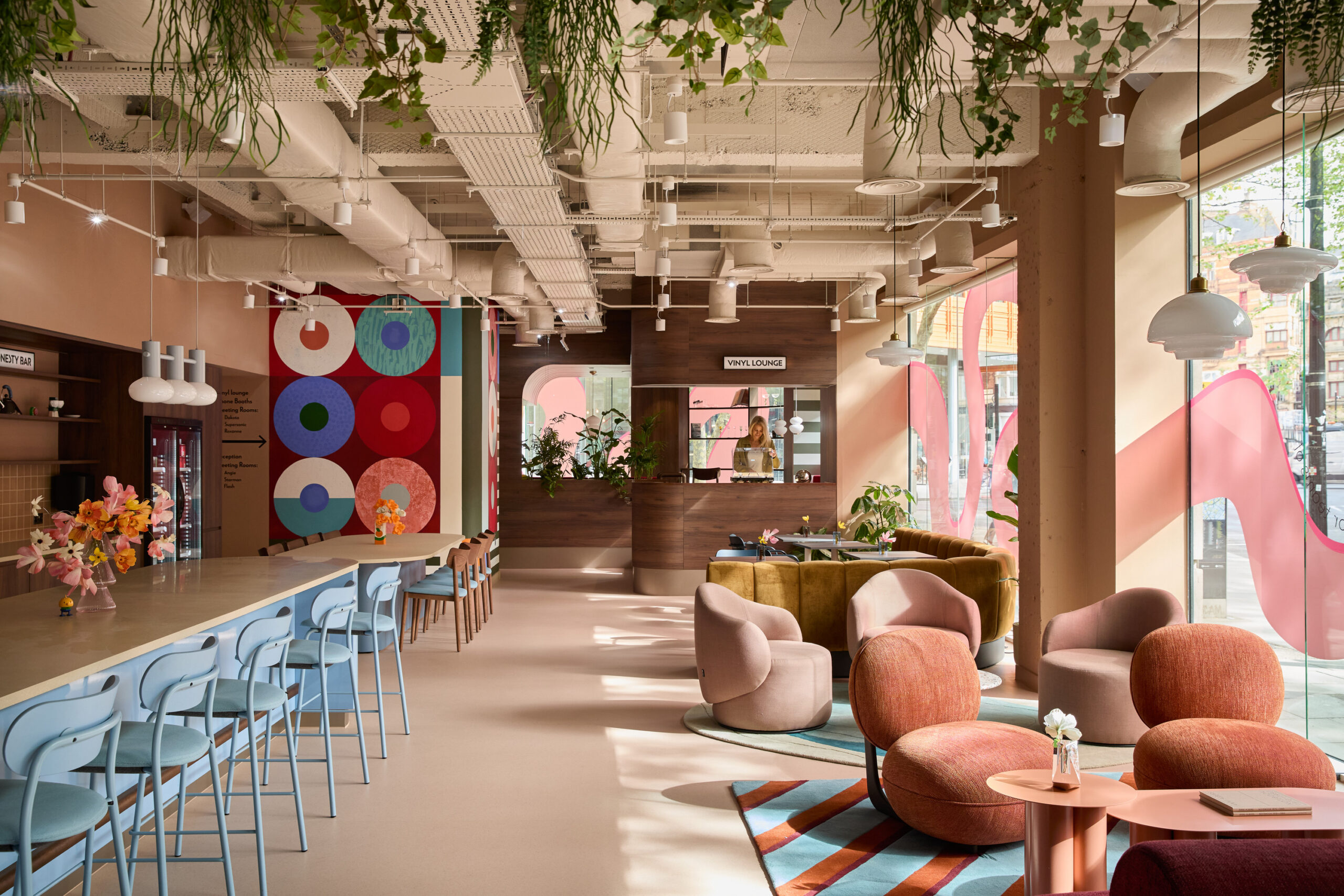
Cheré Falconer co-founded Quarterback in 2020 on a blunt premise: real estate is fixed, and it’s time it was broken. As Co-Founder and Chief Creative Officer, she has spent the years since building an approach to design and delivery that puts people, honesty and long-term thinking ahead of the quick sell.
Ahead of her fireside chat at GCUC UK London, we asked her about the difference between a space that photographs well and one that actually works, the decisions operators keep getting wrong, and how she knows when a beautiful material is worth the money rather than just there for show.

You co-founded Quarterback in 2020 on the belief the real estate execution model wasn’t fit for purpose. What was actually broken about the old way?
“We used to say, “Real estate is fixed. It’s time it was broken.” That phrase really captured why we started Quarterback.
For too long, the construction and real estate industry — particularly the traditional design-and-build model — had been operating in much the same way. It was often opaque, overly sales-driven and, in some cases, lacked the level of accountability and transparency that clients deserved.
We saw an industry where costs, mark-ups and profits were not always clearly managed or communicated; where people’s time and expertise were often undervalued; and where the focus could too easily shift towards closing the next deal rather than delivering the best long-term outcome for the client.
Having worked in similar industries ourselves, we had experienced these limitations first-hand. We knew there had to be a better way.
Our motivation for starting Quarterback was to create a more transparent, honest and collaborative model. We wanted to build a business that genuinely put clients, partnerships and people at the centre of everything we do. Rather than simply selling a service, our aim was to become a trusted partner — taking clients on the journey with us, understanding their challenges and helping them navigate and solve them from beginning to end.
That is why we developed a holistic approach to real estate. Whether a client needs strategic advice, design expertise, construction delivery or support throughout the entire development process, we bring those elements together under one roof. Every project is tailored to the specific needs of the client and the market, with a focus on quality, transparency and seamless execution.
Ultimately, Quarterback was born from a simple belief: real estate should work better for everyone involved. Better for clients, better for partners and better for the people delivering the work. If we could build long-term relationships based on honesty, integrity and trust, then we knew we could create a genuinely better experience — and a better way of doing business.”
On Uncommon Holborn you sourced terrazzo direct from an Italian manufacturer for one detail. How do you decide when that level of craft is worth it commercially, not just aesthetically?
“For us, that level of craft has to deliver more than just a beautiful aesthetic. On Uncommon Holborn, the decision to source the terrazzo directly from an Italian manufacturer was driven by a combination of design, performance, longevity and the client’s values.
The design concept itself was rooted in the existing bones, heritage and character of the building and the site. We retained as many original features as possible and wanted any new interventions to feel like a natural continuation of the building’s story, rather than something simply layered on top.
I’ve always believed that a building tells you what it wants to be — and, to a certain extent, how the spaces should flow. Our role is to listen to that, understand its history and character, and then add to it in a thoughtful way.
That philosophy also influenced our approach to materials. It was particularly important to Uncommon that we used honest, authentic materials — avoiding plastic, imitation or faux alternatives wherever possible. This aligned closely with their B Corp, ESG and carbon governance commitments. We needed to understand exactly what we were specifying, where it had come from and how it had been produced. That level of transparency and traceability was just as important as how the material looked.
We were also fortunate to have a client who was fully involved in the process and genuinely committed to getting every detail right. The terrazzo covered a significant proportion of the site, so this wasn’t a decision that could be made purely on aesthetics. It had to perform commercially and functionally too — in terms of durability, maintenance and how it would stand up to everyday use.
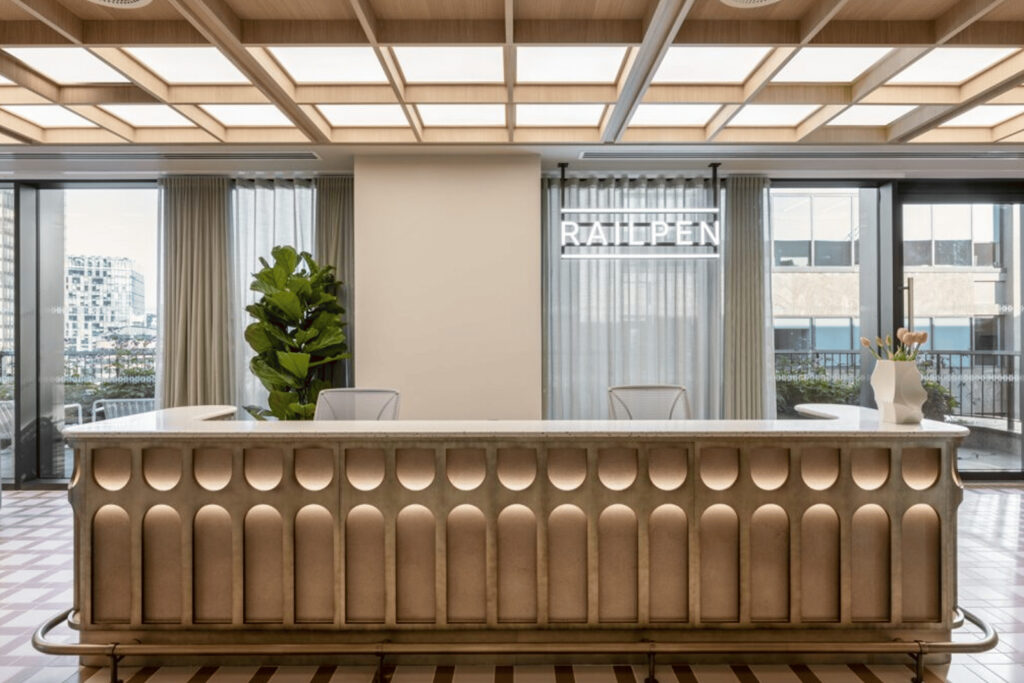
Just as importantly, we wanted to create something with longevity. Buildings go through different lifecycles and uses over time, and our ambition was to create spaces and specify materials that wouldn’t simply be ripped out and replaced at the next refurbishment. We wanted the interventions we made to have a lasting quality — something that could evolve with the building rather than become redundant.
Of course, it always starts with a conversation about budget and priorities. But for us, the real question is not simply, “Is this material more expensive?” It’s, “What value does it deliver over the lifetime of the building?” Sometimes investing more upfront can result in a better-performing, longer-lasting and more sustainable solution.
At Uncommon, wellbeing sits at the heart of the brand’s core pillars, so the materials and environment needed to reflect that. We wanted to create a space that felt genuine, tactile and considered — somewhere people could truly enjoy spending time.
It was a refreshing approach because the client understood that getting it right wasn’t about spending more for the sake of it. It was about making considered investments in the things that would have a lasting impact — on the building, the people using it and its wider environmental footprint.”
Your session’s called “Places People Thrive In.” Without giving away the whole thing, what’s the real difference between a space that looks good and one people thrive in?
“I think the real difference between a space that simply looks good and one where people genuinely thrive is how it makes you feel.
For me, people always come first. You can create the most beautiful space in the world, but if it doesn’t have the right energy, culture, or sense of belonging, then ultimately it won’t work. It’s about creating an environment where people feel comfortable, valued and able to be themselves. That feeling — the vibe, the culture and the human connection — is probably the most important thing.
The same applies to how people are given ownership and responsibility. When you create a culture of trust and give people flexibility and freedom, they tend to feel more invested. That respect goes both ways, and ultimately people work together better. A successful space should support that culture rather than dictate how people behave within it.
Then, of course, there is the practical side — and often it’s the things you don’t immediately see that make the biggest difference. Good connectivity, lighting, acoustics, HVAC and air quality all have a huge impact on how people experience a space every day. If those things aren’t working properly, it doesn’t matter how beautiful the finishes are.
Finally, it’s about creating the right spaces for the right types of work and interaction. People need different environments throughout the day — places to focus, collaborate, socialise, think, meet, or simply take a moment to reset. A space should give people that choice and flexibility.
A truly successful space is one you almost don’t have to think about — it simply supports you, makes you feel good and allows you to do your best work. That’s when people don’t just use a space; they thrive in it.”
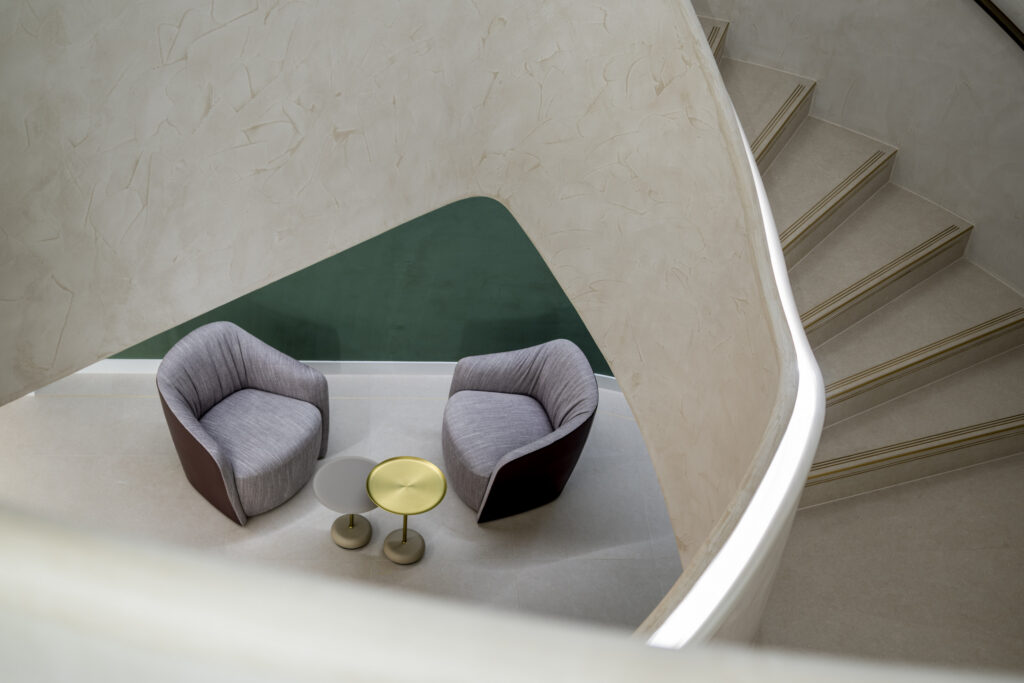
What’s a workspace decision you see operators get wrong because it looks right on a moodboard and fails in daily use?
“One of the biggest mistakes I see is designing for the photograph or the moodboard rather than for the people who are actually going to use the space every day.
A moodboard can look incredible, but a workspace isn’t a moodboard — it’s a living, breathing environment. Something might look fantastic in a render or photograph, but if it doesn’t function properly at 10am on a busy Tuesday morning, then it hasn’t done its job.
Often, the problem comes down to product specification — choosing completely the wrong product for its intended use simply because it looks good. Marble worktops that absorb every stain. Wide, coved skirting that looks great in a photograph but becomes a trip hazard. Beautiful detailing that quickly turns into a dust trap. Unprotected veneer used in wet areas. These are all things that might look fantastic initially but can become a real problem in everyday use.
Another big issue for me is following trends without any real connection to the client, their business or their ethos. Something might be everywhere on Pinterest or look cool on a moodboard, but what does it actually have to do with the people occupying the space?
No concept is probably my biggest bugbear. Everything should start with a clear idea and a reason for being there. The building, the brand, the people and the way they work should inform the design. Without that, you end up with a collection of fashionable products and finishes rather than a space with real identity, purpose and longevity.
Maintenance is another area that is often overlooked. A space might look incredible on day one, but what does it look like in six months, two years or five years? Who is cleaning it? How is it being maintained? How will the materials age? Can elements be repaired rather than replaced? These questions should be considered from the very beginning, not once the project has been handed over.
Aesthetics and functionality should never compete — they should work together. The best spaces are beautiful because they are well thought through, not because someone has simply copied a trend.
Good design might make you stop and look. But great design works in the background. It supports the people using it, ages well, is easy to maintain and continues to make sense long after the moodboard trends have moved on.”
If someone’s on the fence about coming to GCUC UK London, what would you say to them?
“If you’re on the fence about coming to GCUC UK London, I’d say this: don’t come expecting to sit in a room all day being sold to or listening to generic presentations about the future of work.
Come because it’s one of the few opportunities to get the people who are actually building, running, investing in and shaping this industry in the same room — and have honest conversations about what’s really working, what isn’t, and where we go next.
What I find particularly refreshing about GCUC is the diversity of perspectives. You have operators, landlords, developers, investors, designers, suppliers and people from outside the traditional coworking world. Everyone sees the industry through a slightly different lens, and those conversations are often where the most interesting ideas come from.
I’d also say that the value isn’t just on the stage. Some of the best conversations happen over coffee, in the workshops, during the drinks reception or while visiting spaces together. You meet people facing the same challenges as you, but you also meet people who challenge your thinking.
And that’s why I think it’s worth coming. You might arrive expecting to learn something from a particular speaker or session, but you could leave with a completely new perspective, a valuable relationship or an idea that changes how you approach your business.
The flex and coworking industry is changing quickly. I think there’s real value in occasionally stepping out of your own business, getting into a room with people who understand the challenges, and asking: Are we doing this the best way we can — or is there a better way?
If you’re curious about where this industry is going, want to meet the people shaping it, and are open to having some honest conversations along the way, then I’d come to GCUC.
And hopefully I’ll see you there.”
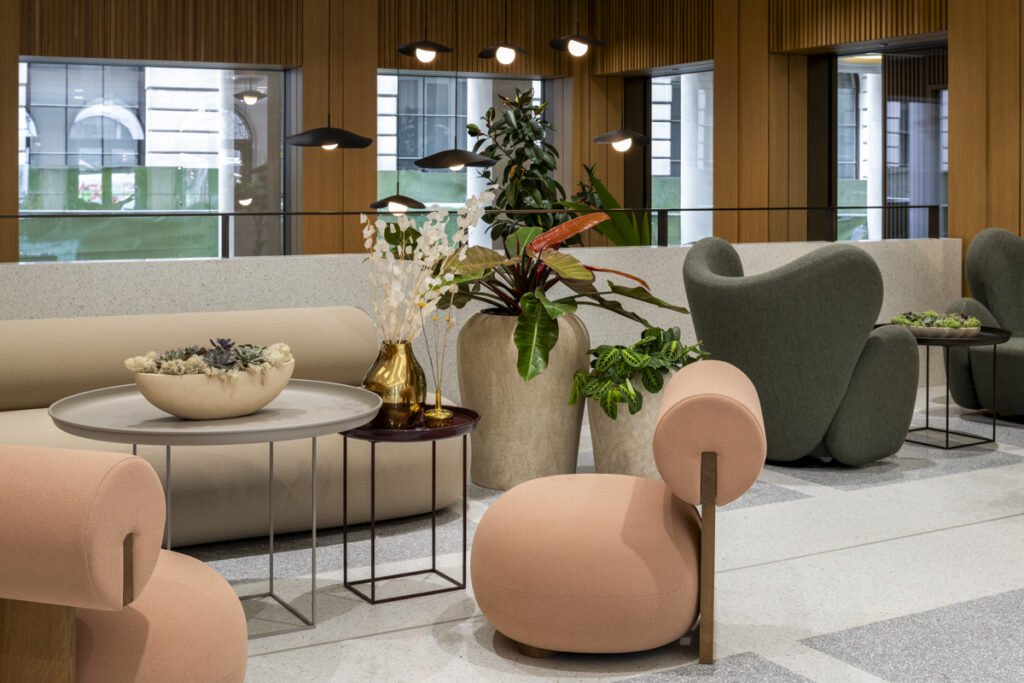
Image credit: Quarterback
What’s something you like to do to switch off outside of work?
“Ah, lots of things! I have a dog, so there are plenty of walks, and I’ve recently got back into painting — but my newest passion is definitely surfing.
I started about a year ago and absolutely love it. It’s taught me a huge amount about myself, particularly about fear, patience and learning how to push yourself beyond your comfort zone. But perhaps what I love most is that, when you’re out there, you have no choice but to focus entirely on the one thing in front of you.
We’re so conditioned to multitask all day — reading emails while watching television, developing a design concept on the commute, listening to a podcast while messaging friends and replying to voice notes. It’s constant, and our minds rarely get a moment to be fully present.
Surfing takes all of that away. You have to focus. You have to breathe. You have to be patient and respect what’s in front of you. And with every set, you’re learning something new.
For me, that’s what makes it such a brilliant way to switch off. It’s one of the few things I’ve found that completely quietens everything else down and forces you to just be present in the moment.
And, of course, it’s also just enormous fun.”
If there’s a thread running through everything Cheré says, it’s that the spaces worth building are the ones that keep working long after the moodboard trends have moved on. Beautiful design matters, but so do the connectivity, light, acoustics and sense of belonging that decide whether people actually want to be somewhere.
You can hear more from her in Places People Thrive In, her fireside chat at GCUC UK London on Thursday 8 October at TOGETHER, 88 Wood Street, alongside Mark Eltringham of Workplace Insights and Elliott Sparsis of TOGETHER. The session sits amongst two days of honest conversation between the operators, designers, landlords and investors shaping the flex industry.
Join us: Buy Tickets