
GCUC UK Blog
GCUC London 2025: The Coworking Industry Grows Up
- Community
- GCUC London
- Industry
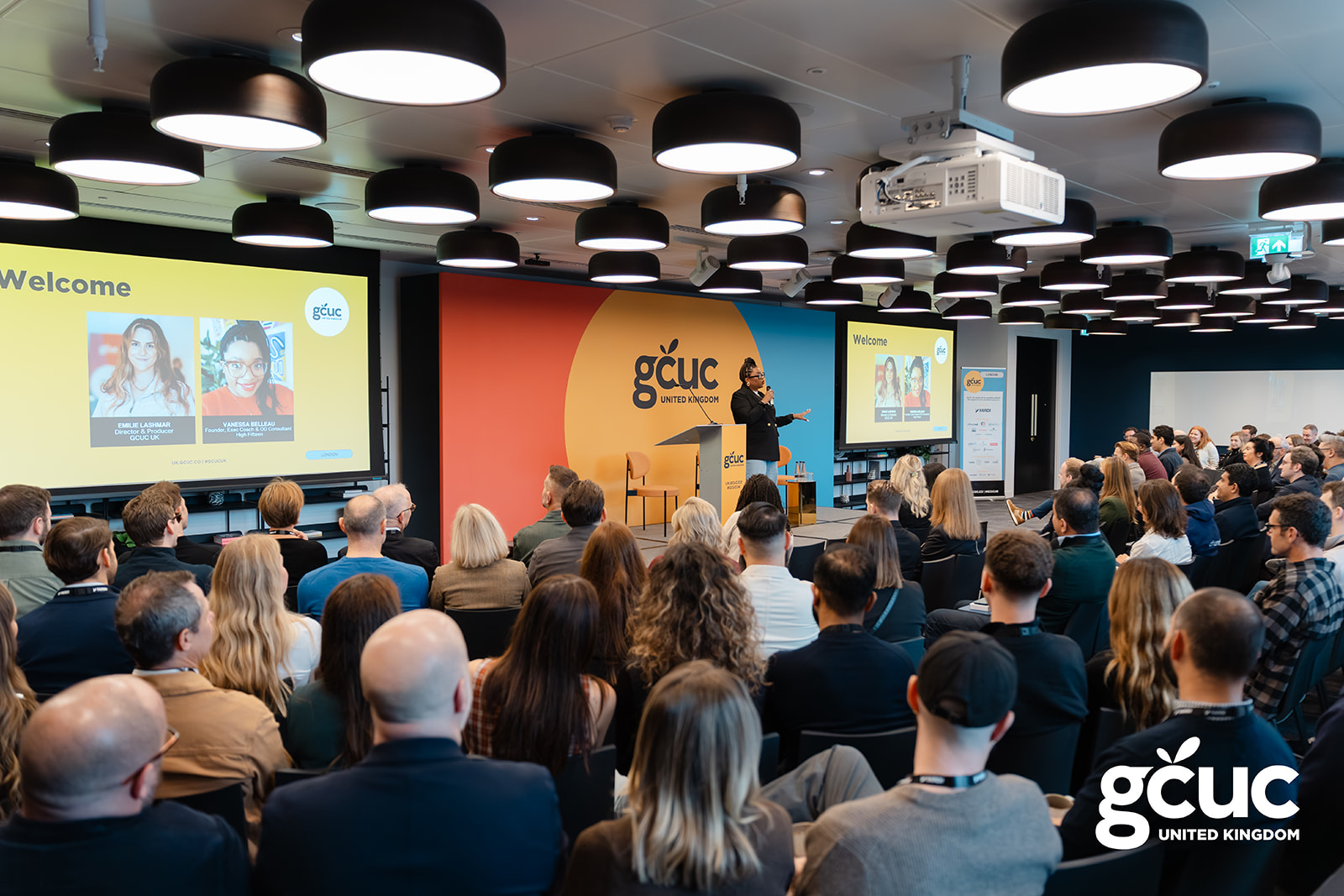
The energy at the Global Coworking Unconference Community London Edition (October 8-9, 2025) felt less like a typical conference and more like an industry reckoning. Held at Convene, 22 Bishopsgate, the event brought together operators, landlords, investors and designers for two days of sharp debate about what it actually takes to scale coworking sustainably, without losing the human magic that made it special in the first place.

Vanessa Belleau (2025 MC) & Emilie Lashmar
Emilie Lashmar (GCUC UK Director & Producer) and Vanessa Belleau (High Fifteen) set the tone from the opening moments, bringing an energy that was part choreography, part emotional intelligence, and entirely electric. As one attendee later described it: “Vanessa was the brightest light in every room.”
What emerged was a clear message: the coworking industry is reaching an inflection point. To be taken seriously as an investable asset class, operators must prove three things at once: repeatable data, operational discipline, and genuine community impact.
Here’s what we heard.
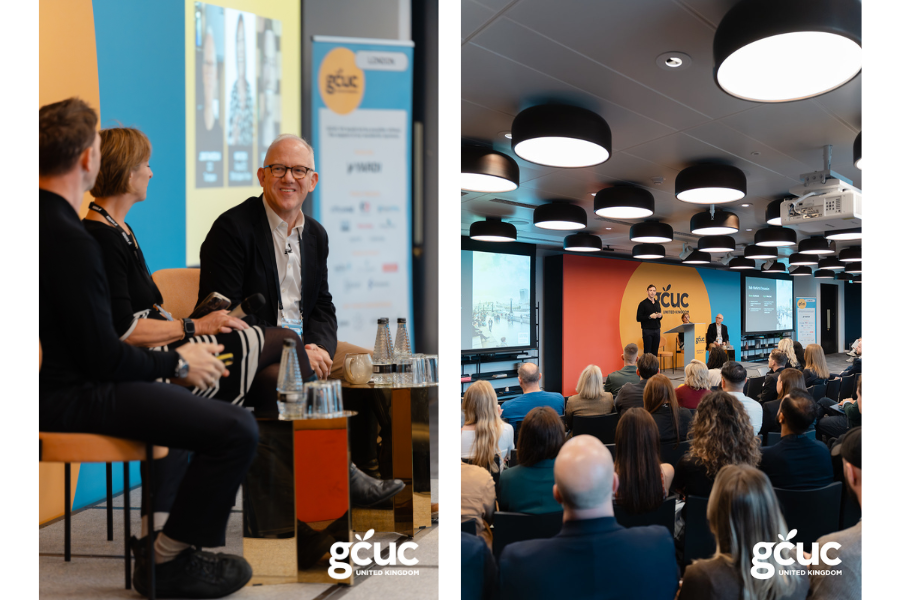
Jonathan (Techspace) Niki (Office Space in Town), Elliot (Work.Life) | WIN
The Data Revolution: Why Numbers Matter Now
For years, flexible workspace operated in a data fog. Operators knew their own numbers. Investors guessed. Landlords went on anecdotes.
That changed at GCUC UK London, where Jonathan (Techspace), Niki (Office Space in Town), and Elliott (Work.Life) introduced WIN (Workspace Intelligence Network), a new operator-led data consortium aggregating anonymised data from 27 brands across 473 sites and 7.9 million square feet.
“We started with three of us,” Elliott explained. “Then we grabbed people like Andy from Runway East, Matt from Labs, Lucy from Kit. Now we’re up to 27 brands and they keep joining.”
The insight is clear: when you benchmark against real market data, everything changes. Board conversations shift from “I think” to “here’s the evidence.” Landlord pitches become sharper. Valuations move closer to reality.
Nikki, whose personal passion is around valuation, added a crucial point: “Data, collaboration and vision will really get changes for the industry. When you use data to benchmark and tell your story, you build intelligence and credibility. When you collaborate more, you strengthen the whole sector.”
The numbers are early but real. West End private desks hold at £700-£777 per month. South Bank sustains 90%+ occupancy. Whole-site revenue per square foot ranges from £120 to £160 depending on location.
The challenge? Trust. “As a sector, we haven’t been very good at that,” Elliott noted. “There’s been a win-you-lose mentality. But we’re seeing a shift. We’re going to win together as a sector, not as individual operators.”
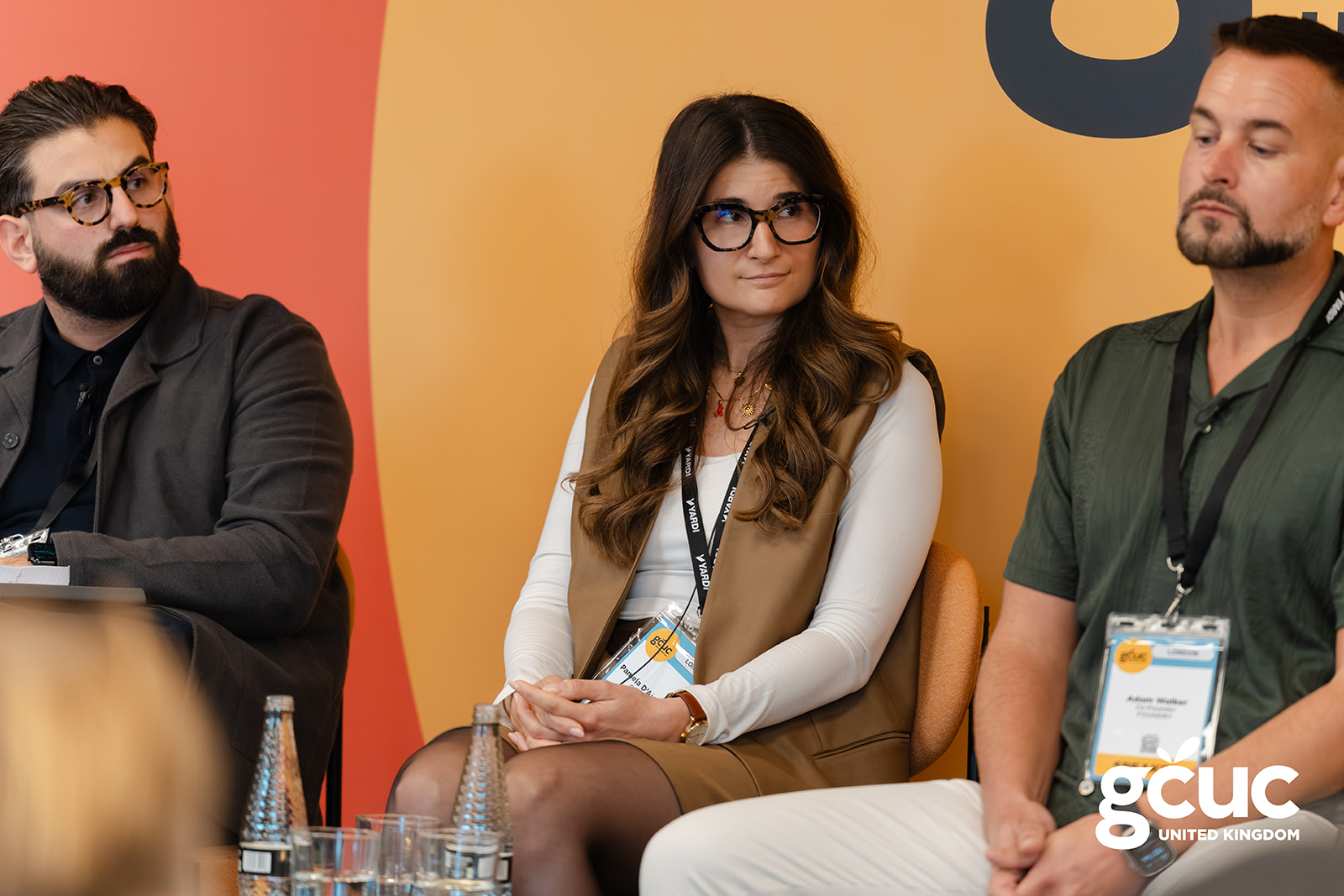
Denz (L&G), Pamela (Interaction), Adam (Foundry)
Institutional Money Changes Everything, If You’re Ready
The second major thread was the Foundry story, told by Adam (Foundry), Denz (Legal & General’s Future Places), and Pamela (Interaction Design).
This wasn’t just another funding story. It was a masterclass in what institutional capital actually demands and why so many flex operators fail to deliver it.
Institutional investors (pension funds, long-term capital vehicles) think differently than venture money. They’re patient but unforgiving.
“We are constantly reminded that we are spending pensioners’ money,” Adam said. “It’s about investing very consciously and delivering real value that may be wider than just the desk rent.”
When Foundry partnered with Legal & General, the priorities shifted fundamentally. Dan explained: “We wanted more control around creativity. We have patient capital, so we can invest and really think about environments that future-proof the asset.”
The operational bar rose too. “We had to mature very quickly and focus on governance,” Adam recalled. “Building a really solid executive team around me was critical.”
Pamela (Interaction) outlined three certainties that build investor confidence: “Design certainty, cost certainty, and program certainty. You have to deliver on budget, on time, and with quality.”
Legal & General measures both vertical value (rent, occupancy, retention) and horizontal value (how flex drives engagement across the whole asset, builds loyalty, anchors mixed-use development). One striking example: a landlord allowed coworking on ground floors at £20 per square foot (instead of £40) because the residential above achieved a 25% rental uplift just from having the workspace amenity.
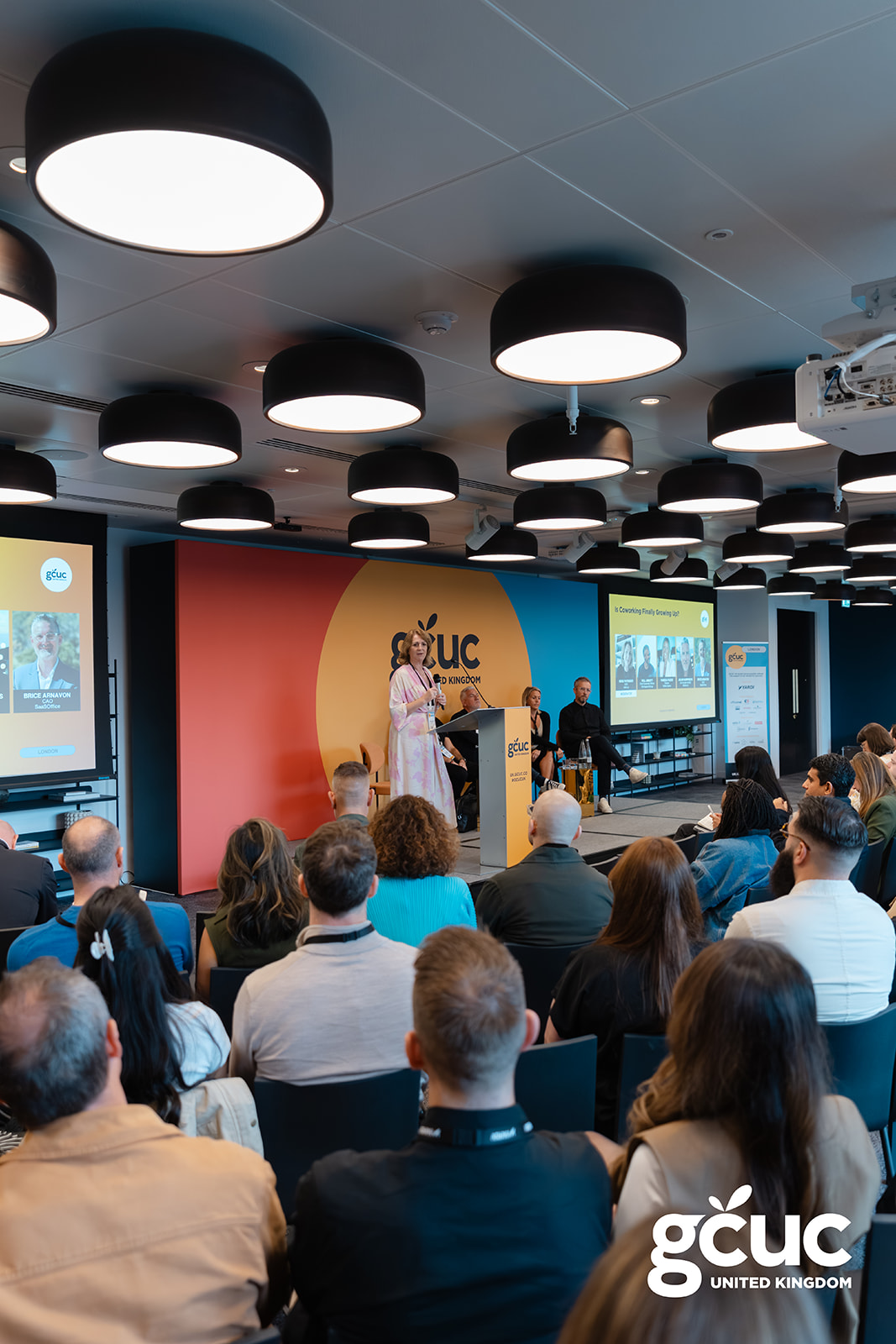
Keke (Koho.ai) Julian (Motom.io), Brice (SaaSOffice), Will (Workshop Group) Vanesa (NoBa Capital)
Growing Up Without Losing the Soul
The third theme cut to the heart of an operator’s dilemma: how do you become predictable and investable without turning community into a spreadsheet?
Will (Workspace Group) introduced “bounded freedom” as the sweet spot: give teams autonomy inside clear guardrails (commercial impact, alignment with values, customer outcomes).
The math explains why this matters. With 100 customers at 3% churn, you need 4 new customers to grow. With 1,000 customers at the same churn rate, you need 31 new customers just to maintain. Churn becomes the killer of recurring revenue businesses.
On values and hiring, Brice (SaaS Office) was direct: “People beats process. Hire for principled behaviour first, train for aptitude. Values must translate into actionable behaviours.”
On KPIs, the panel agreed: pick four or five per department, make sure retention is one of them, and measure relentlessly. “It’s about being brutal and few,” Vanessa (NoBa Capital) said.
Finally, leaders must stay connected. “As sites and member lists scale, the distance between founder and customer grows quickly,” “Podcasts, member interviews, and real face-time are non-negotiable.”
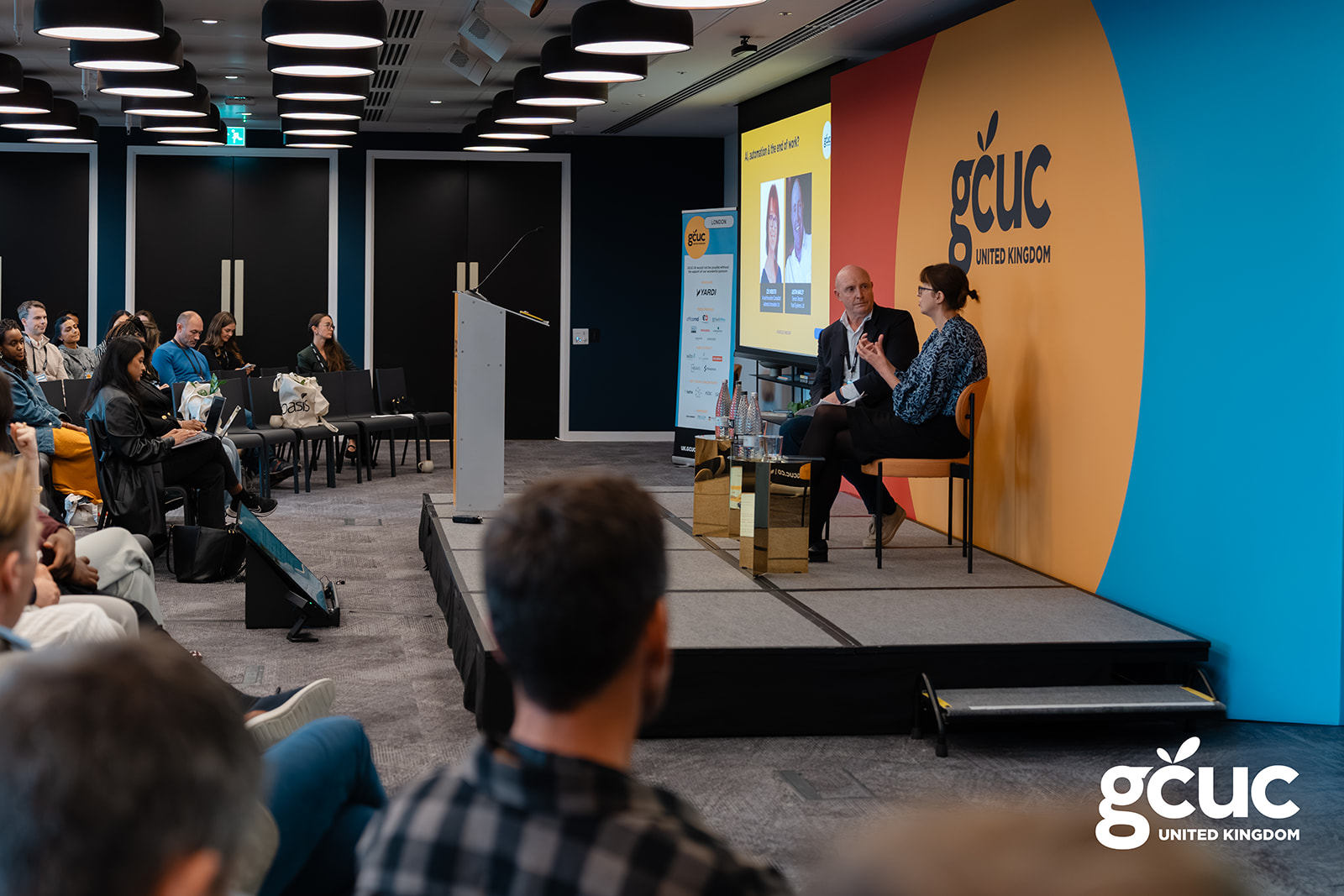
Justin Harley (Yardi) in conversation with Zöe Webster (Authentic Innovation)
The AI Question: Tools, Not Miracles
Zoe’s session on artificial intelligence cut through the hype with practical realism.
The starting point: AI is broader than chatbots. Generative LLMs (ChatGPT and friends) are only a slice. Classical machine learning, recommender systems, and edge analytics often deliver faster ROI and fewer surprises.
“Most AI pilots don’t scale,” Zoe said bluntly. “Only a small percentage of generative-AI experiments actually make it into production.”
For operators, three use cases emerged as genuinely valuable: Insight (find patterns humans can’t see at scale), Automation (free staff from repetitive tasks), and Generative Help (faster content creation, drafting).
The human side matters too. “Studies show people are collaborating less because they’re asking ChatGPT instead of colleagues,” Zoe noted. “That shifts the why and how of coworking spaces.”
A provocative idea emerged: “AI-free” or “AI-conscious” spaces could become a niche offering, marketed to privacy-conscious founders and creatives who want deliberately human-only zones. Pricing won’t be mass-market, but it could command a premium.
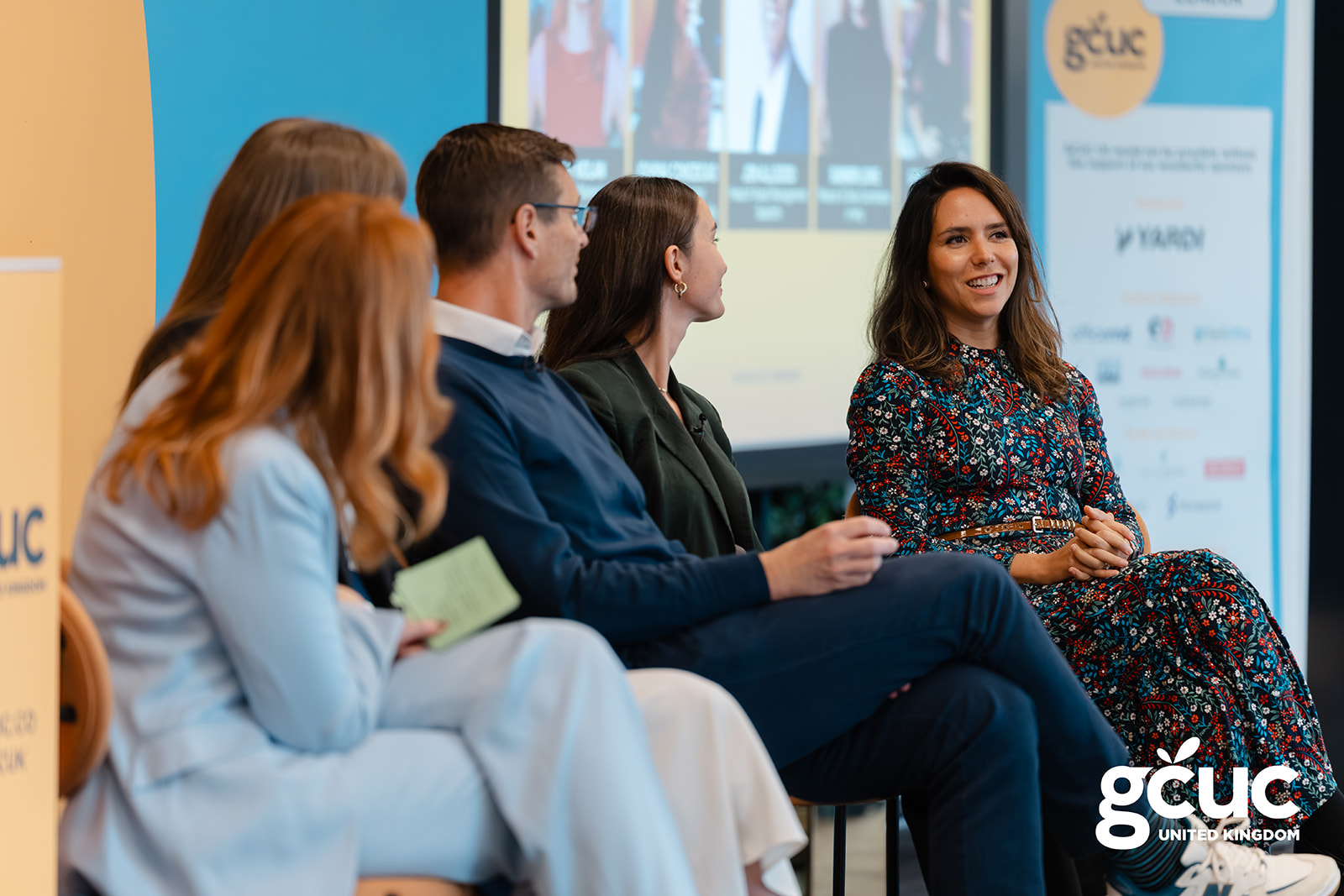
Mary (technologywithin), Joanna (Sustainable Design, Savills), Gosia (Uncommon), Jon (Seaforth), and Summer (X+Y).
Circularity as Economics, Not Ethics
The final critical thread moved sustainability from ethics to economics, led by Mary Nolan (technologywithin), Joanna Conceicao (Sustainable Design, Savills), Gosia (Uncommon), Jon (Seaforth), and Summer Lowe (X+Y).
Tenants increasingly demand ESG data and certifications as a baked-in part of corporate leasing decisions. Research showed that in the first half of 2024, tenant lease activity in London was more than 10% higher for buildings rated BREEAM Excellent or Outstanding.
“Sustainability has shifted from nice-to-have to baseline requirement,” Gotcha said. “Tenants demand transparent carbon data, impact reports, and support achieving their own accreditations.”
Quick wins pay back and improve tenant demand: switch to renewable energy suppliers, install motion sensors and water saving fittings, invest in sub-metering, reuse fit-out materials.
One striking insight from Jo: “36% of embodied carbon in one fit-out came from office chairs and desks purchased new. Sourcing meeting room furniture second-hand through platforms like Material Exchange could dramatically reduce this impact.”
Summer emphasized: “It’s such a simple switch for carbon reporting. Renewable energy is one of the easiest wins you can make.”
True circularity goes beyond recycling. “It starts with design,” Jo explained. “Knowing where products come from, purchasing second-hand, conducting lifecycle assessments. But equally important is tenant education and engagement. Everyone has recycling bins but few care without proper signage and meaning behind it.”
John added a key reality: “Landlords are not all the same. You need alignment of interests. Understand the capital stack behind the building, because equity drivers matter as much as operations.”
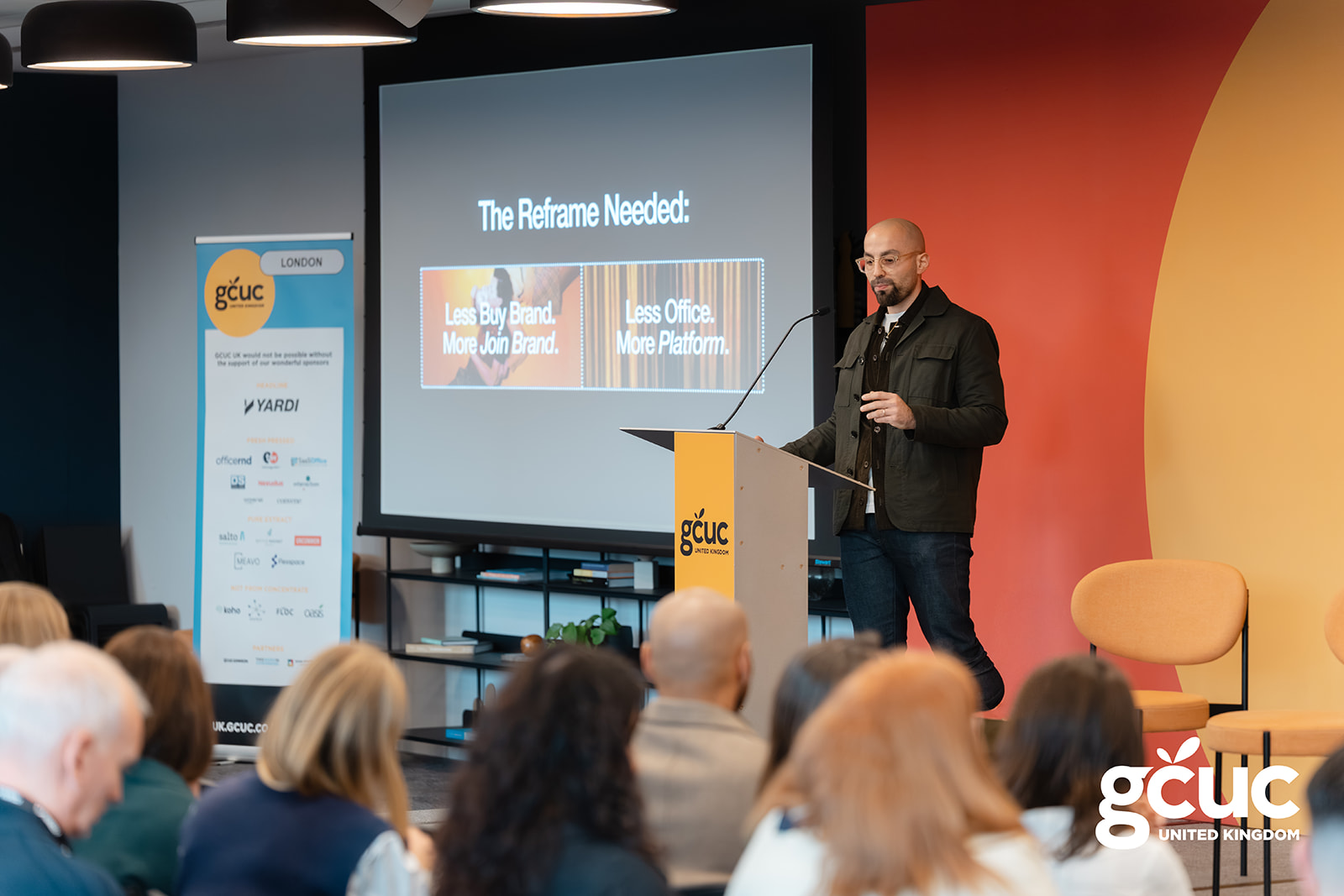
Koral Ibrahim (The Ready House)
Belonging Over Access: The Brand Revolution
One of the day’s most powerful sessions came from Koral Ibrahim (The Ready House), who reframed how we think about flex spaces entirely.
Spaces need to shift from being places people buy access to into places people join.
Koral introduced the Culture Space Framework, five interlocking elements every successful space must design for: Physical Space (the tangible environment), Functional Experience (what people can actually do there), Emotional Signal (the feeling the space deliberately communicates), Community Loop (the recurring interactions that turn visits into relationships), and Cultural Travel (how your space extends into social channels and local culture).
“Successful spaces speak like a magazine, change like a gallery, share like an app, build loyalty like a club, experiment like a lab, connect like a friend, and entertain like a show,” she said. “Brand today is what people do with you, not what you tell them.”
The implications are concrete. Design programming that creates recurring loops. Build small, regular surprises to keep the emotional signal fresh. Measure retention and word-of-mouth as seriously as occupancy.
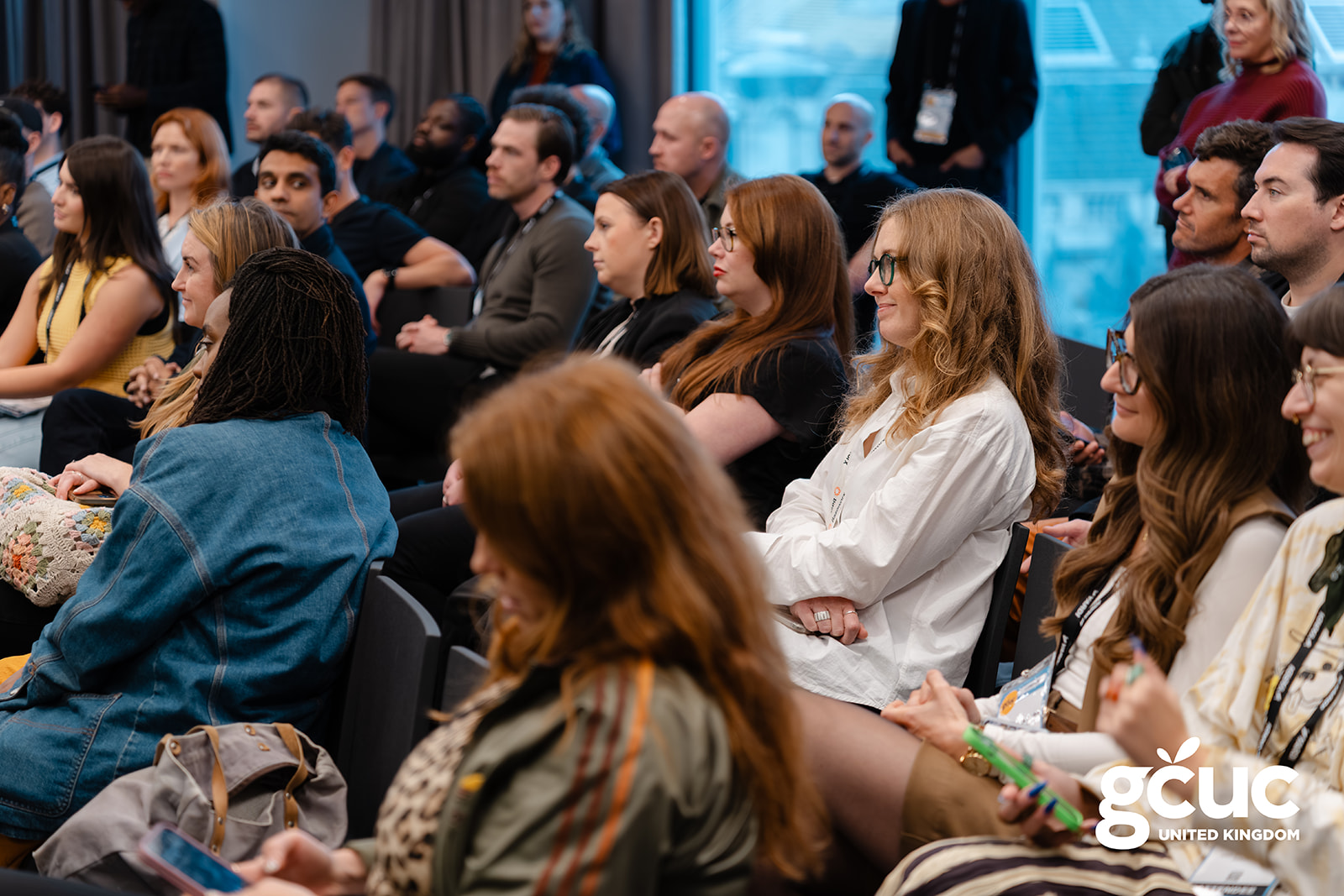
GCUC UK Attendees
What This Means for Operators
GCUC London 2025 wasn’t shy about the message: the flex workspace industry is at a crossroads. Operators who want to scale must choose to get rigorous about data, about governance, about people, about measurement.
But rigour doesn’t have to mean soullessness. The operators who will thrive are the ones who combine operational discipline with genuine community design. They’ll use data not to automate away the human element but to make it scalable and defensible.
Here are six concrete actions to take this week:
- Join WIN or similar data networks: Start submitting anonymised data. One site’s worth of reliable numbers suddenly makes your board conversations calmer and your landlord pitches sharper.
- Map your data: Create a one-page inventory of what you measure, where it lives, and who owns it. Aim for clean, consistent schemas.
- Design for belonging, not just occupancy: Use the Culture Space Framework. Assess Physical Space, Functional Experience, Emotional Signal, Community Loop, and Cultural Travel. If one lens is weak, the place feels hollow.
- Pick your KPIs: Choose four or five metrics per department. Make sure retention is one of them. Measure relentlessly.
- Interview your members: Talk to 10 members this month. Leaders who stay plugged in survive the scale curve.
- Test an AI quick-win: Automate one recurring admin task. Measure time saved. Prove ROI before scaling.
The Bottom Line
GCUC London 2025 was about the flex workspace industry growing up, not just getting bigger, but getting smarter, more disciplined, and more honest about what drives value.
The playbook is clear: nail your data story, build repeatable operations, invest in genuine community design, and stay connected to why you do this in the first place. That combination is rare, defensible, and worth scaling.
The operators who do this will thrive. The ones who don’t will become generic, undifferentiated, and vulnerable.
The industry’s moment is now.
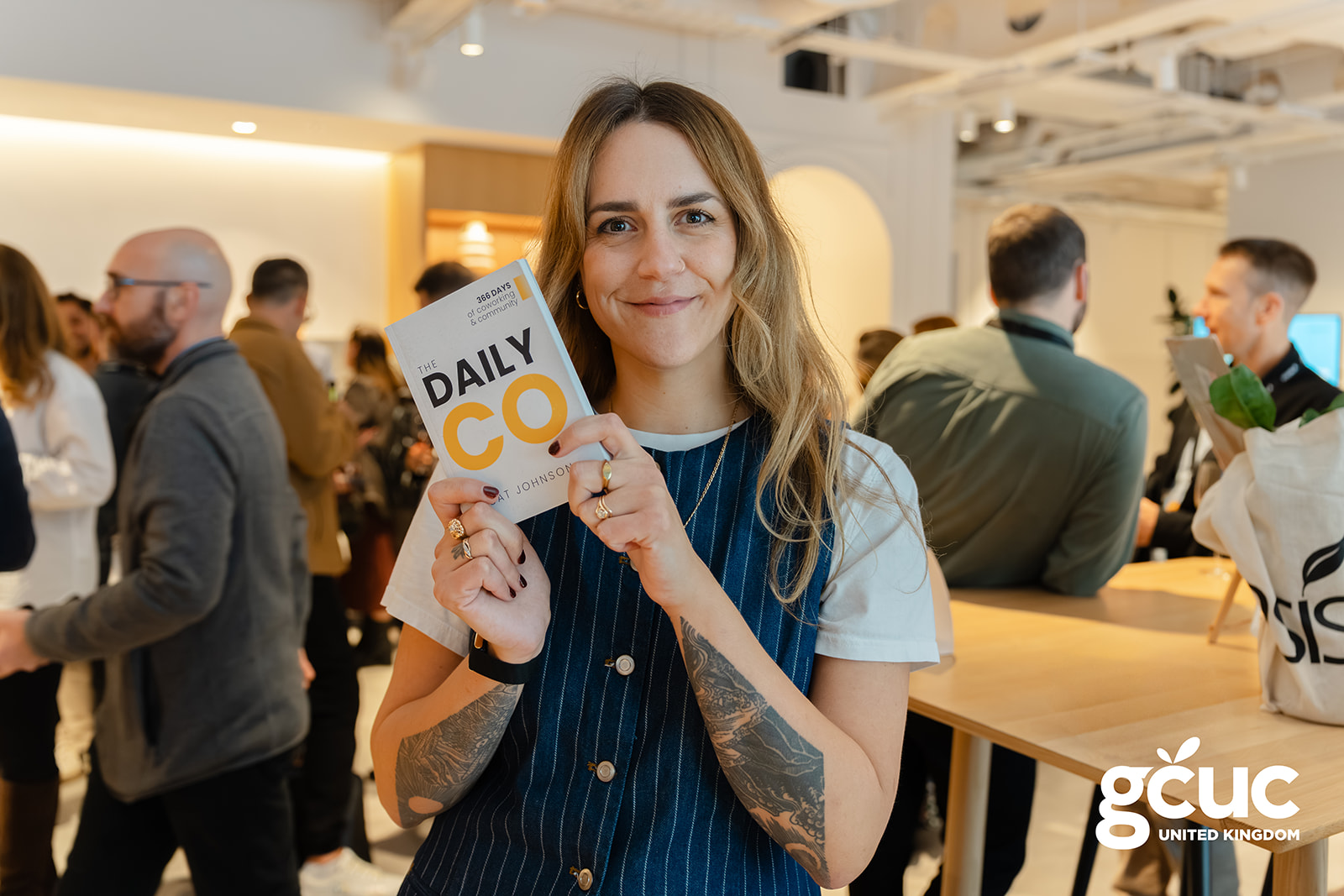
Emilie Lashmar, GCUC UK Director & Producer