GCUC UK Blog
How should office landlords deliver flex?
- Events
- GCUC London
- Industry
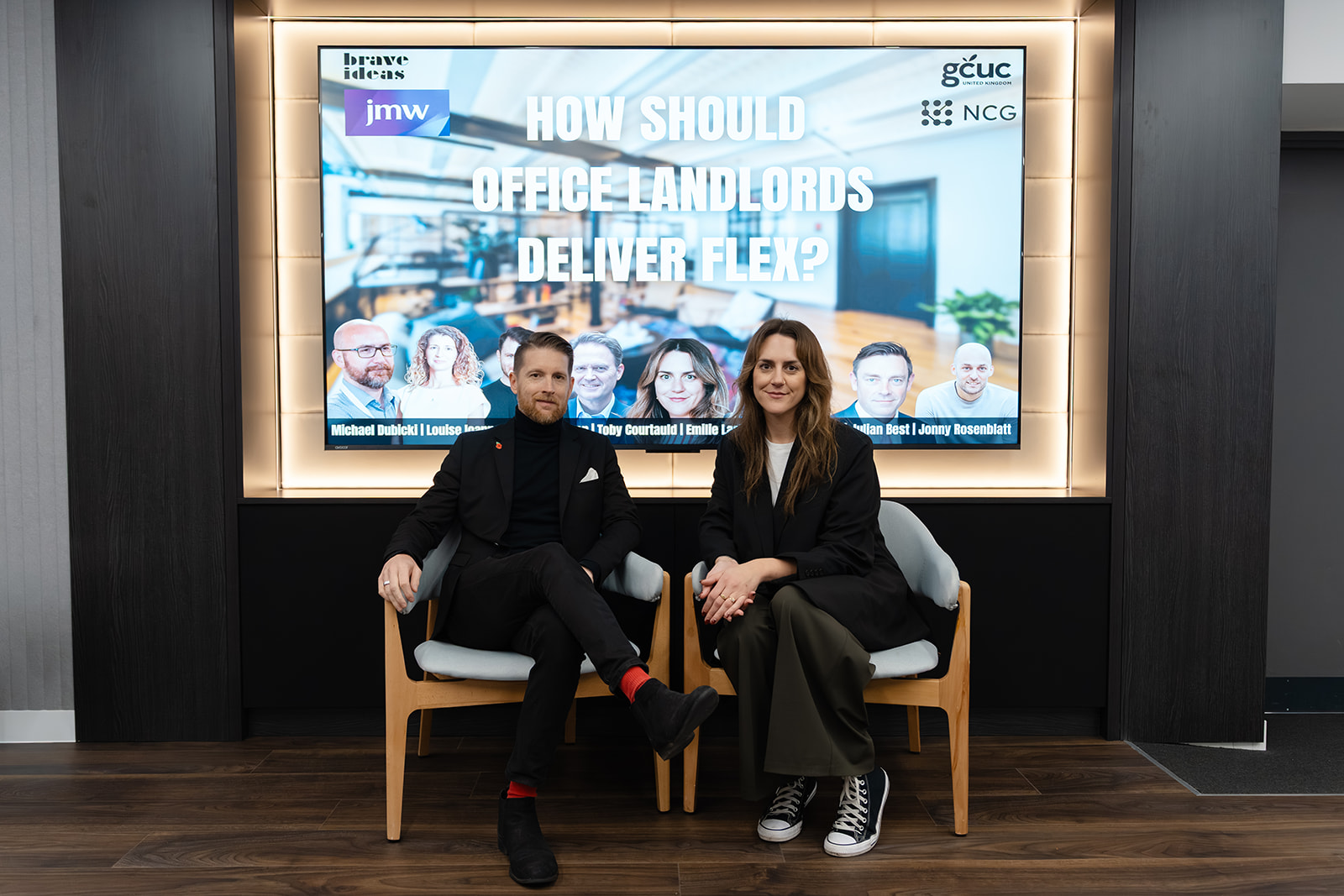
GCUC UK and Brave Ideas kicked off a no-nonsense breakfast session in the City, hosted by JMW Solicitors LLP and sponsored by NCG, with one clear question:
Should landlords deliver flex themselves or work with someone who already knows how?
No theory. Just real examples. What worked, what didn’t, and what customers actually want.

Master of Ceremonies, Michael Dubicki (Director, Flex Strategy & Growth for NCG)
Build it in-house? Only if you’re set up for it
The first panel, moderated by Emilie Lashmar of GCUC UK, brought together Zac Goodman (TSP), Toby Courtauld (GPE), and Louise Ioannou (HB Reavis UK) to talk about landlord-led flex.
Their view was clear. In-house flex only makes sense if you’ve got the right ingredients. Scale. Operational budget. Long-term conviction. And the ability to build a real business on top of your assets.
The common thread? It’s easy to underestimate what operators do. Running flex means building a service business, not just cutting up floor plates.
As Zac Goodman put it, “As more landlords do it, the margins shrink. Is this model still worth it long-term?”

Louise Ioannou, Head of Workspace for HB Reavis UK and Zac Goodman, CEO for TSP
Talk like a customer, not LinkedIn
There was a sharp divide between industry language and what customers actually say. Most don’t ask for “flex”. They ask for simple terms, fast move-in, and space that helps their team thrive.
Emilie asked the panel to challenge their own assumptions:
“Are we guilty of designing too much around market language and not enough around user behaviour?” No one disagreed.
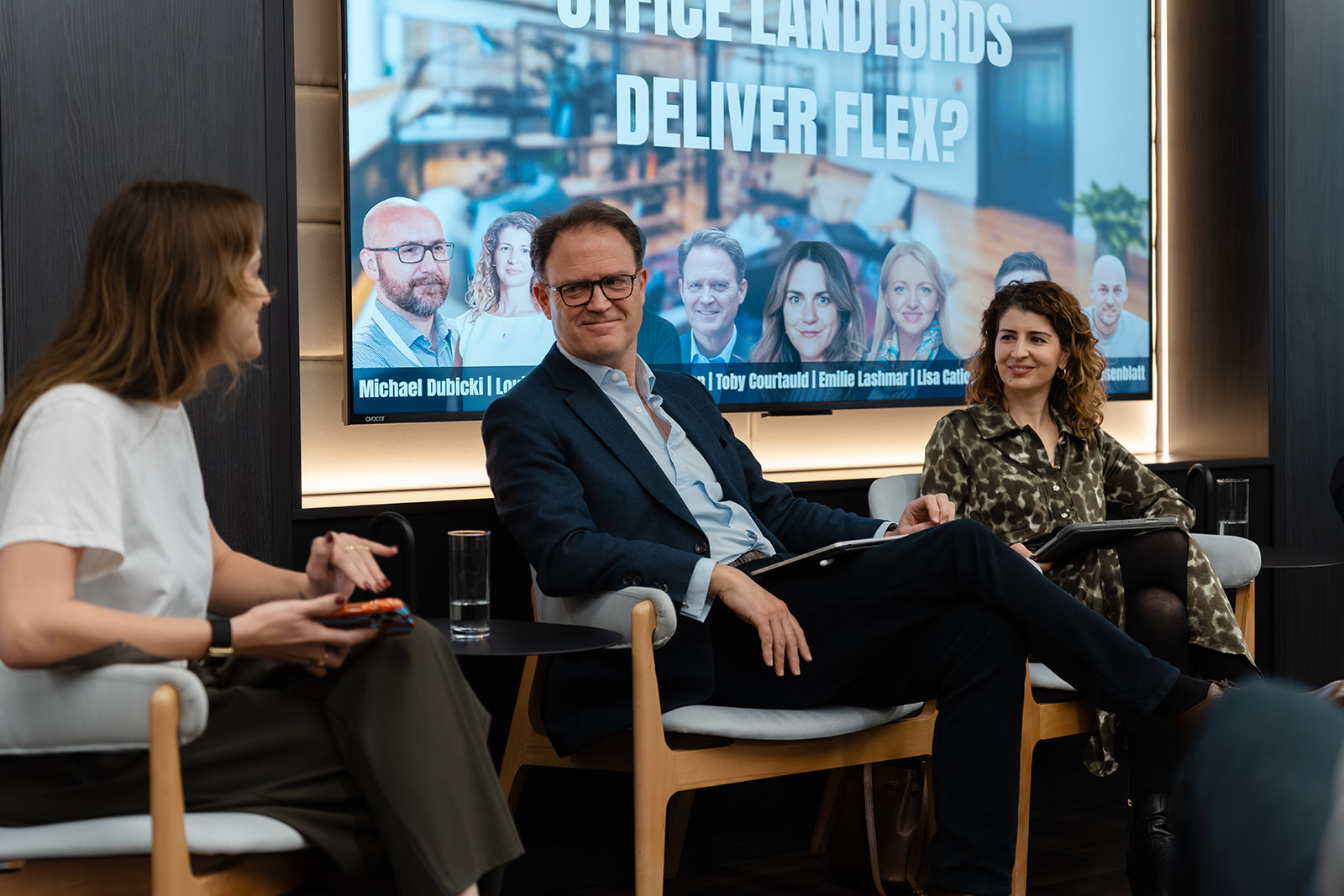
Emilie Lashmar, Director GCUC UK with Toby Courtauld, CEO for GPE and Louise Ioannou, Head of Workspace for HB Reavis UK
Community is retention, not decoration
Forget yoga and beer taps. Community came up as a commercial tool, not a lifestyle bonus. If it lifts renewal rates, it’s valuable. And in flex, renewals are everything.
As Zac pointed out, “One renewal can pay for a year’s worth of community activity.”
In a market where empty space is expensive, community starts to look like risk management.
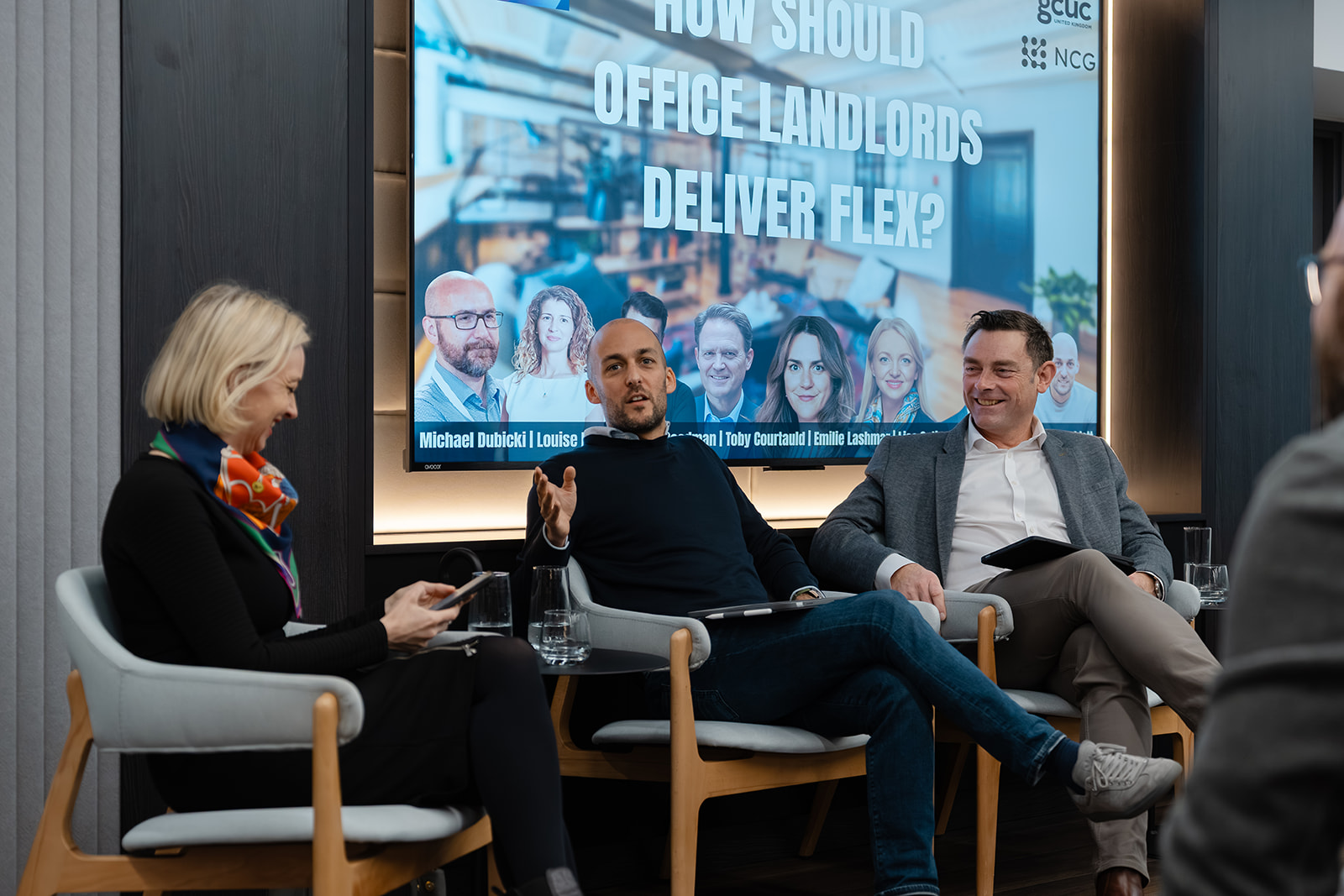
Lisa Cations, Managing Director for JCR Advisors with Jonny Rosenblatt, CEO for Spacemade and Julian Best, Property Director for Howard de Walden Estate
Partnering can go further, faster
Panel two, expertly moderated by Lisa Cations, turned to a different route: the Howard de Walden and Spacemade partnership, shared by Julian Best and Jonny Rosenblatt.
What began as a tactical fix became a long-term strategy. The partnership spans multiple buildings and sectors, including a strong healthtech presence at Hale House.
Julian explained how flex now plays a role in estate-wide value. Jonny broke down how a management agreement let Spacemade go deeper on brand, hospitality and service without the landlord needing to build that from scratch.
“We’re going deeper on hospitality, programming, vertical expertise and we’re doing it across the estate,” Jonny said.

Attendees at ‘How should office landlords deliver flex?’
Two viable models. Two different setups.
Both panels pointed to the same truth. Flex is growing. It delivers higher NOI and stronger customer stickiness when done well.
But landlords need to be honest about what they’re set up to deliver.
If you have scale, capital and a long view, building in-house can work.
If not, partnering may get you there faster with less risk.
In either case, success depends on the same thing. Understanding the customer, delivering what they value, and treating flex as a serious operating business.
This wasn’t landlords versus operators. It was about alignment. Strengths on both sides, and better outcomes when those strengths are combined.
Want to get your brand in front of the next wave of flex-forward landlords and operators? Sponsor GCUC UK