
GCUC UK Blog
The Missing Piece: Why Coworking Spaces With Childcare Are Finally Getting It Right
- Community
- Coworking
- Industry
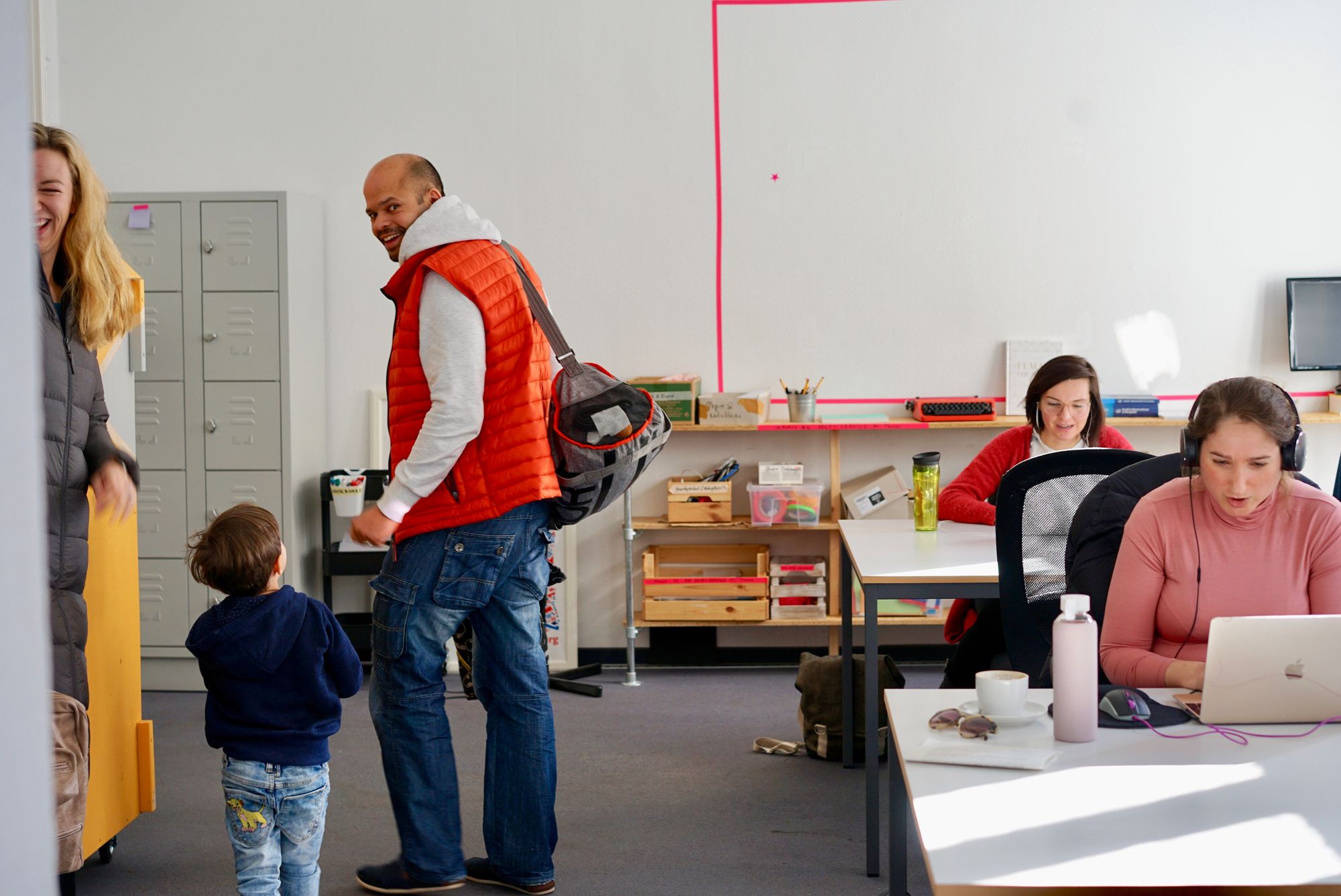
Picture this: a working parent drops one child at nursery, another at a holiday club, fights traffic, and arrives at work already exhausted. The day hasn’t even started yet.
Now imagine something simpler. One place. Children cared for nearby. Work done with focus. Everyone goes home together.
That’s not a lifestyle fantasy. It’s a design problem that we’ve been avoiding for years.
What I Saw First-Hand
When I worked at a coworking space in Brighton, something interesting happened. A local childcare provider closed, and almost overnight we saw a surge of new members. Talented, motivated professionals who wanted to work but suddenly had nowhere reliable for their children to go.
They weren’t asking for perks. They were asking for something basic: a way to keep working without everything else falling apart.
That was the moment it clicked for me. Coworking spaces weren’t just places to work. They were already halfway to being the solution. Close to home, community-led, flexible by nature. We were just missing one crucial piece.
In 2017, I wanted to integrate childcare directly into the space. The pushback was immediate. It wouldn’t work commercially. Too complex. Too expensive. Too risky.
What struck me was how confidently that was said, despite the very real demand sitting right in front of us.
This Isn’t a New Need
Growing up, my mum ran an after-school club at the local school. It was informal, practical, and absolutely essential for working families. People relied on it. It kept households functioning.
Nothing about that need has disappeared. If anything, it’s intensified.
Today, my partner and I are self-employed, and we’ve made childcare work through a careful balance of days, flexibility, and constant coordination. It works, for now. But I can already see what’s coming next. School schedules, holiday cover, breakfast clubs, after-school pickups. The real juggling act hasn’t even started.
What I want is simple. A local coworking space with childcare built in. Not bolted on. Not treated as an afterthought. Designed properly, from the start.
And I know I’m not alone.
A Commercial Opportunity Hiding in Plain Sight
This conversation often gets framed as emotional, or political, or nice to have. That’s a mistake.
Working families already spend significant money across fragmented services. Childcare, workspace, after-school care, wellness, community. These are all separate subscriptions, separate locations, separate decisions.
Coworking operators who bring even part of this together aren’t running a charity. They’re building stickier memberships, longer retention, and deeper relationships. They’re solving a real problem, and people pay for real solutions.
This is about better design and smarter models, not goodwill.
Learning From the First Movers
Coworking with childcare isn’t a new idea. Early pioneers proved there was demand, but they also showed how hard it was to execute. Running a workspace and a childcare operation under one roof is complex. Regulation, staffing, insurance, margins. None of this is simple.
Some of those early spaces didn’t survive. That doesn’t mean the idea failed. It means the timing, models, or execution weren’t quite right.
What they did prove, undeniably, is that when it does work, the loyalty is exceptional. Parents don’t churn lightly when childcare is involved. Trust runs deep. Community strengthens quickly.
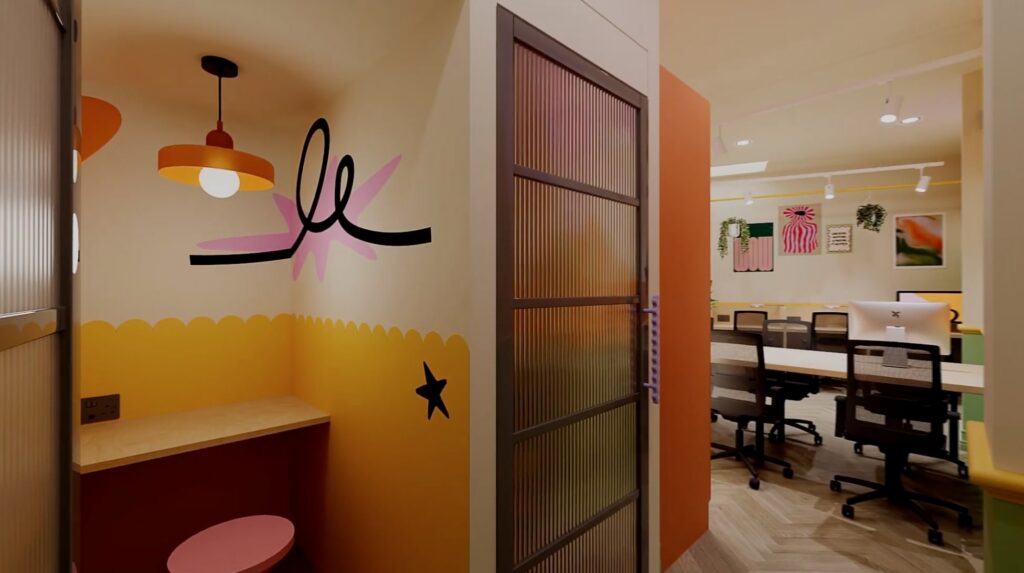
Source: The Working Mums Club
Why It Looks Different Now
What’s changed is not the need. It’s the context.
Work is more flexible. Expectations are different. Parents are clearer about what they will and won’t tolerate. Employers and operators alike are realising that bringing your whole self to work only matters if systems actually support real lives.
We’re seeing a new generation of spaces experiment more thoughtfully.
Shorter childcare sessions rather than full-day nurseries
Partnerships with established childcare providers rather than in-house builds
Designs that allow parents to be close, without distraction
Clear focus on specific life stages, like returning to work or school holidays
This isn’t about copying a single model. It’s about adapting intelligently to local demand.
The Working Mums Club in Deptford opened in 2025 with a Montessori-inspired nursery, flexible workspaces, and wellness programming. It’s designed for mothers returning to work and built around community.
KindHaus in Stoke Newington piloted a short-session childcare and coworking model focused on wellbeing. It’s not currently open, but plans are in place for relaunch.
Work+Play Hub in Edinburgh enables parents to work metres away from their children, who are cared for by early years staff in a supervised play space. It’s flexible, affordable, and rooted in community.
WRAP in Brighton integrates a nursery onsite, offering a practical, modern solution in a city full of freelancers and creatives.
This Is About Infrastructure, Not Perks
Childcare isn’t a luxury add-on. It’s infrastructure. When it works, everything around it works better. Focus, productivity, wellbeing, retention, community.
For coworking operators, this isn’t about chasing trends. It’s about recognising who the workforce actually is, and designing spaces that reflect real life, not idealised versions of it.
The operators who get this right won’t just win members. They’ll earn loyalty that lasts long after the childcare years are over.
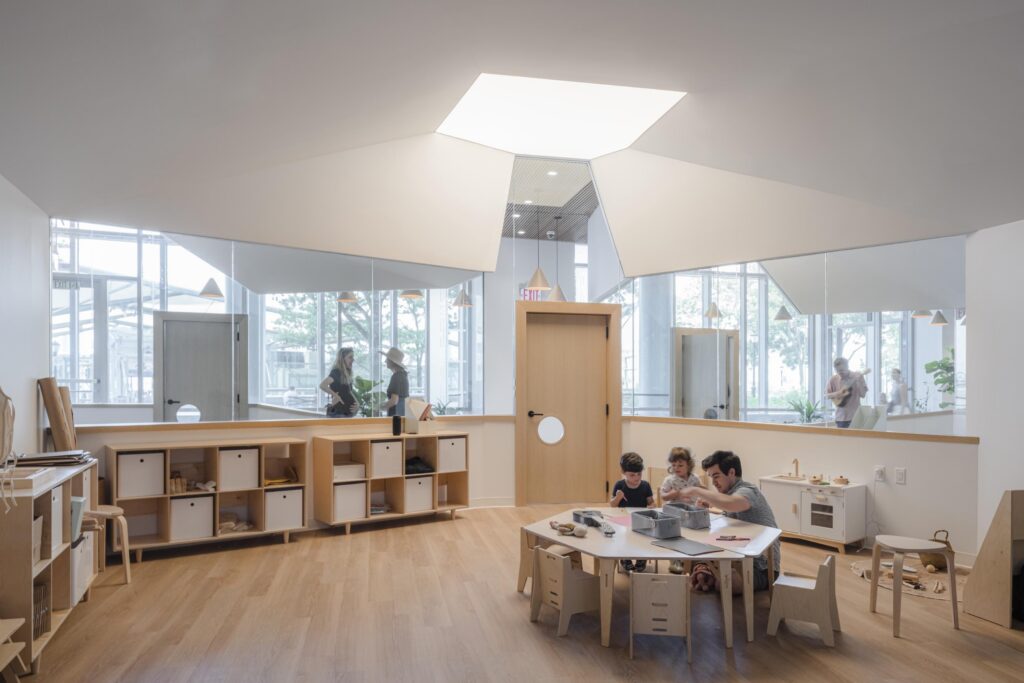
Source: Big And Tiny
The Bottom Line
Years ago, I was told integrating childcare into coworking wouldn’t work financially. What I’ve seen since suggests something else. We’ve been measuring the wrong things, and designing for the wrong assumptions.
The question isn’t whether coworking spaces should think about childcare. It’s whether they can afford not to.
I still want that local coworking space with childcare for my family. And I know I’m not the only one.
This isn’t just a professional interest. It’s a very real, very personal need, and one the industry is finally starting to meet.