
GCUC UK Blog
Trust, reach, and the rooms we build at GCUC UK
- Coworking
- Industry

As GCUC UK has grown, the focus hasn’t been how big we can get, but on what kind of room we’re building.
In most industries, growth is still measured in reach. Attendance numbers, mailing lists, social visibility. Those metrics are easy to point to and easy to compare. But they don’t necessarily tell you what happens once people are in the room together, or whether the conversations that start there continue beyond the day itself. Reach can increase visibility and bring new voices into the conversation, which certainly matters. But on its own, it does not necessarily create connections with depth.
When we look back at what has carried forward from one GCUC UK event to the next, the pattern is less about scale and more about continuity.
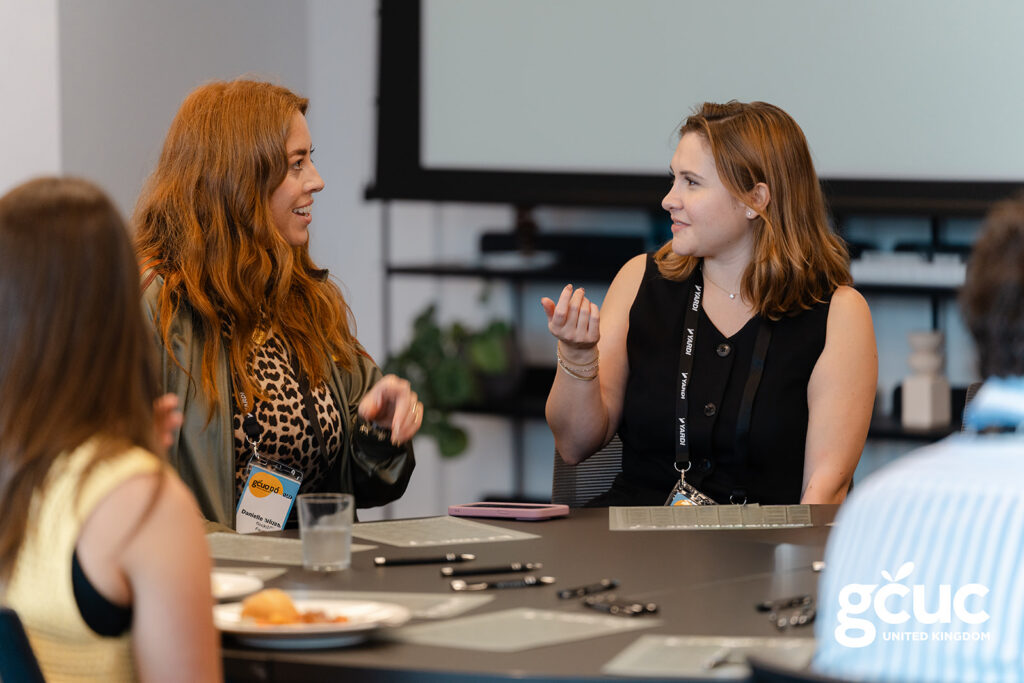
The value of the day isn’t just determined by the number of people in the room. It is the nature of the conversations within it. We see it in how discussions pick up months later without needing a full reset. We see people willing to test early thinking out loud, rather than waiting until it is polished; and introductions that are made with a level of confidence that comes from familiarity, not just proximity. Over time, that continuity has come to matter more than headline numbers.
Trust at this level builds through repetition and consistency. It forms when people recognise each other, understand each other’s context, and feel that the room itself is a stable place to speak plainly. It builds when returning doesn’t feel performative, and when disagreement can sit comfortably alongside respect.

At GCUC UK, people are not simply exchanging ideas for interest’s sake. They are weighing options, sense-checking plans, and trying to understand how others are navigating similar challenges. Day-to-day decisions sit alongside long-term portfolios, operational complexity, and commercial pressure. In that context, trust is not a soft benefit. It reduces friction and more importantly it shortens the distance between conversation and action.
That’s why room size has never been our only consideration. Growth has been shaped by how the room works, and by whether the conditions that allow trust to develop are still intact.
When a room becomes too busy or too fragmented, it becomes harder to sustain those conditions. Conversations grow thinner and context has to be rebuilt each time, which means people retreat to safer exchanges.

By contrast, when there is enough continuity and enough time to talk properly, the tone of the room shifts. Conversations pick up more quickly. Community strengthens because people arrive with shared reference points. There is less need to establish credibility from scratch and more willingness to explore ideas in progress. That shift changes what people expect when they return, and also has a positive effect on newcomers.
Of course, reach will always have a place. New perspectives matter, and fresh energy keeps a sector moving. But without trust underneath, visibility alone rarely translates into momentum. The rooms we build at GCUC UK – and the way they have grown – have been shaped by that experience. Growth has followed the health of the room rather than the other way around.
In a sector where relationships sit alongside long-term commercial commitments, that kind of depth carries practical weight, and it influences how conversations continue long after the room itself has emptied.