GCUC UK Blog
Nearly 4700 spaces, and the regional story is only getting more interesting
- Coworking
- Industry
- Reports

The UK coworking industry still talks about itself as if it begins at Old Street and ends in Shoreditch. The Q2 2026 data from CoworkingCafe suggests it should probably stop doing that.
London dominates? That is not the story.
Greater London accounts for 1,275 of the UK’s 4,415 spaces. Roughly a quarter of the total, in one city. That will not surprise anyone working in this industry. London has always dominated flex by volume, by density, by the concentration of global capital and multinational occupiers that has shaped the market since the conversation started.
The more interesting number, as it was when we looked at the last report, is Manchester.
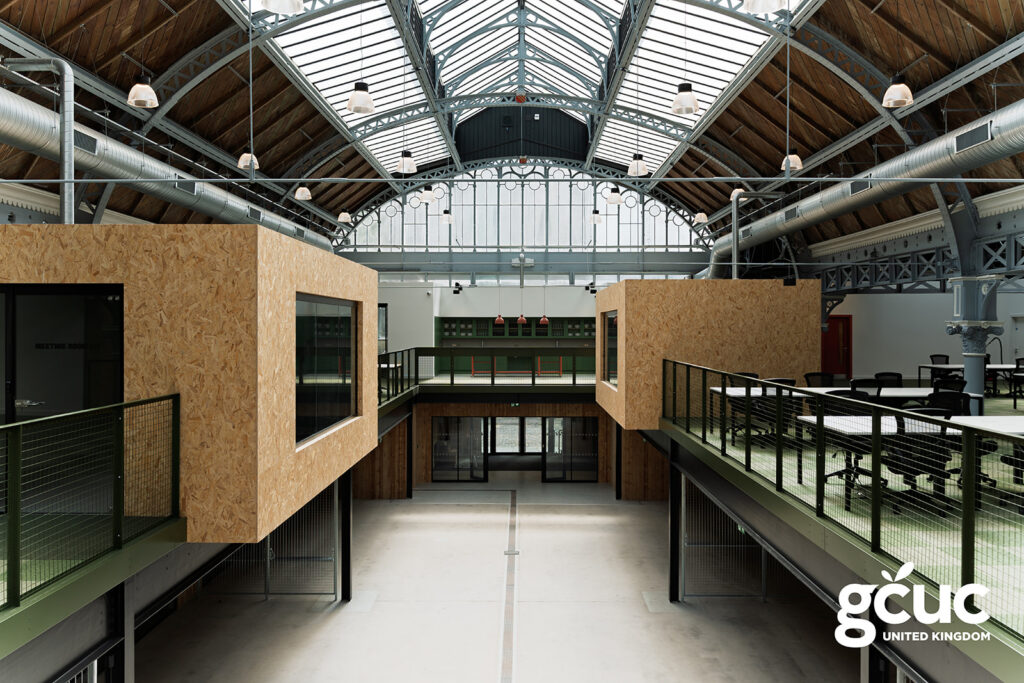
Manchester is in a different conversation
At 128 spaces, Manchester is the strongest city outside London by a clear margin. Glasgow and Birmingham sit at 73 and 72. Bristol edges Leeds, 69 to 65. Edinburgh rounds out the mid-tier at 60.
The gap between Manchester and the cities behind it is not marginal. Glasgow, in second place regionally, is 55 spaces back. That is not a market that is slightly ahead. It is a market that has been building seriously for the best part of a decade and is now operating at a different level.
We spent a day in Manchester four weeks ago at GCUC UK. Colliers put data in the room that told the same story from a different angle: Manchester now leads the UK on flex share of new leasing. Corporate occupiers are not choosing it because it is cheaper than London, though it is. They are choosing it because it has what their people actually want. A university and tech scene, a city centre worth living in, a coworking market mature enough to meet enterprise expectations.
The CoworkingCafe pricing data reinforces this. A monthly membership in Manchester has a median of £197. London, Glasgow, Bristol, Leeds, Edinburgh and Brighton all sit at £195. Manchester is not pricing below the pack to fill desks. It is pricing above it.
Beyond the big two
The report’s city-by-city breakdown is a useful corrective to the way the industry tends to talk about itself. Belfast, at 44 locations, is a more substantial market than the London-centric conversation usually acknowledges. Cardiff at 40 is the largest in Wales. In Ireland, Dublin’s 129 spaces make up just under half the national figure, shaped by its density of tech multinationals and scaling startups; but the rest of the country accounts for 154 spaces that rarely get discussed at all.
The pricing spread across the UK is also wider than you might expect. Day passes range from £18 in Aberdeen to £30 in London, Edinburgh, Oxford and Belfast. Monthly memberships from £129 in Aberdeen to £295 in Oxford, which sits in a category of its own at the top end, well above London’s £195. Meeting rooms from £16 per hour in Nottingham to £54 in London. For operators, the practical implication is straightforward: national benchmarks are a starting point, not a proxy for your market. The relevant comparison is always local.
The Oxford anomaly
One number in the pricing data sits apart from everything else. Oxford’s monthly membership median is £295. That is well above every other city in the dataset.
Oxford does not feature in the usual regional coworking conversation. It is not a city the industry instinctively talks about when it comes to growth markets. But a £295 median is not a quirk of one expensive space skewing the numbers. It is a market with its own supply and demand logic: an internationally mobile workforce, a constrained city centre, and a cluster of deep-tech and life sciences businesses that need flexible space and can pay for it.
It is a reminder that the regional opportunity is not uniform. The cities below Manchester on the inventory list are not all the same proposition, and the pricing data is one of the more useful tools for working out which of them are actually interesting.

The operator landscape
Unsurprisingly, Regus remains the largest UK operator with 238 locations nationwide. Fora is second with 62 across the 16 largest markets, Bruntwood third with 53, Workspace Group fourth with 46, Spaces fifth with 44. That huge gap between first and second tells you something about how this industry has consolidated, and how much room there still is for operators building genuine depth in the cities they know.
Bruntwood’s position in that top three matters. A Manchester-rooted business that built its footprint from the North West outward, into Birmingham, Leeds, and Cambridge. Its presence in the national rankings is a reflection of what Manchester has become.
What the numbers do not tell us
The CoworkingCafe data is built from listing inventory. That is a genuinely useful starting point, and this quarterly series is one of the better public datasets the sector has. But it captures what exists, not how it performs. Occupancy, revenue per desk, member tenure, churn: none of that is in here, because almost none of it is shared anywhere.
At GCUC UK Manchester, Jonny Rosenblatt of Spacemade said it plainly. The regional dataset is only as good as the operators willing to feed it. The hotel industry has had shared operational benchmarking for decades. Coworking is still largely trading in anecdote and approximation.
That is the conversation we are taking to GCUC UK London on 8 October. One of the sessions on the agenda is specifically about the data we do not share, and what changes when we start to. It’s a room you need to be in.
The full CoworkingCafe Q2 2026 report is here.