GCUC UK Blog
The customer in the room: navigating modern commercial lease trends
- Coworking
- GCUC Manchester
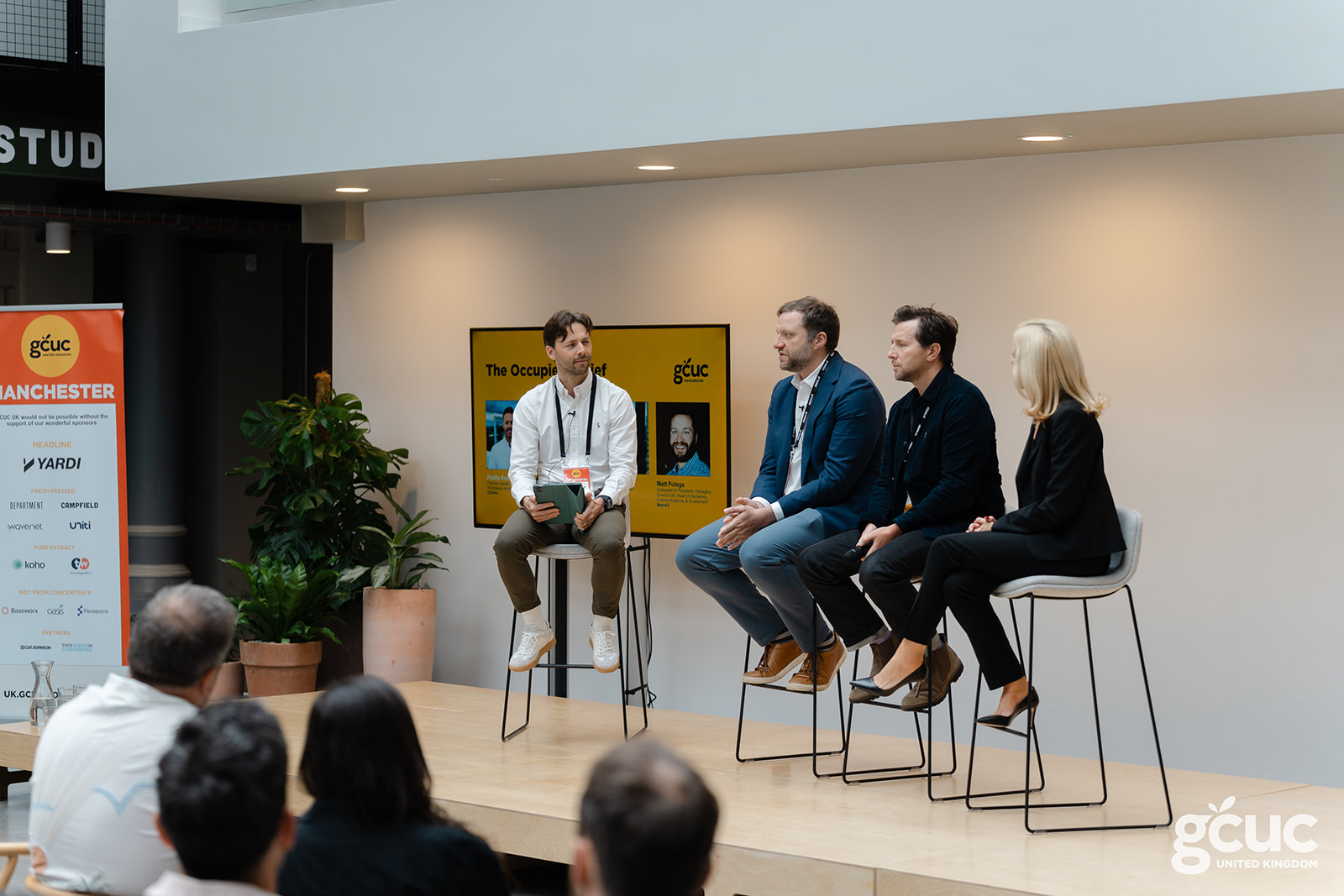
The coworking industry has a habit of talking to itself. Operators compare notes with operators, vendors pitch vendors, and the person who actually signs the contract and sits at the desk is often left somewhere down the hall.
We opened GCUC UK Manchester by doing the exact opposite, with a session called The Occupier’s Brief, and a conversation that put the customer on the stage.
How commercial lease trends are shifting in the UK
First, the lay of the land. Colliers’ Paddy Kennedy and Phoebe Reilly set out what they are tracking across both the UK and global markets. Paddy’s summary of how the traditional property world views flexible workspace doubled as a description of the mood in the room:
“Hated, adored, never ignored. It feels quite apt for the flex industry.”
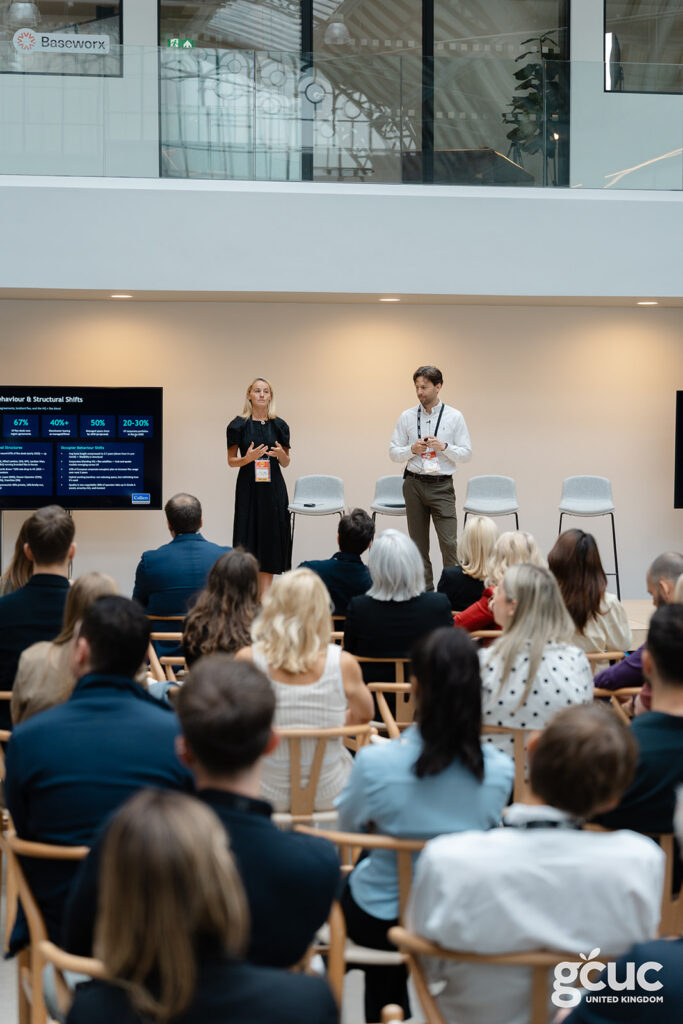
The headline shift is that flex has officially stopped being a post-pandemic improvisation. It has matured into a deliberate, long-term corporate strategy. Beneath that macro trend, the structural way companies take space has completely changed. As Phoebe Reilly noted:
“Lease length has decreased from five years to about 3.7. That’s a huge lean into flex, because occupiers want flexibility now.”
Quality, she argued, is now simply the baseline price of entry rather than a premium differentiator. Interestingly, the dominant global names no longer corner the market the way they once did. Enterprise occupiers are increasingly putting their trust in local, boutique operators who intimately know their city, which is a significant change in who actually wins the deal.
The occupier reality
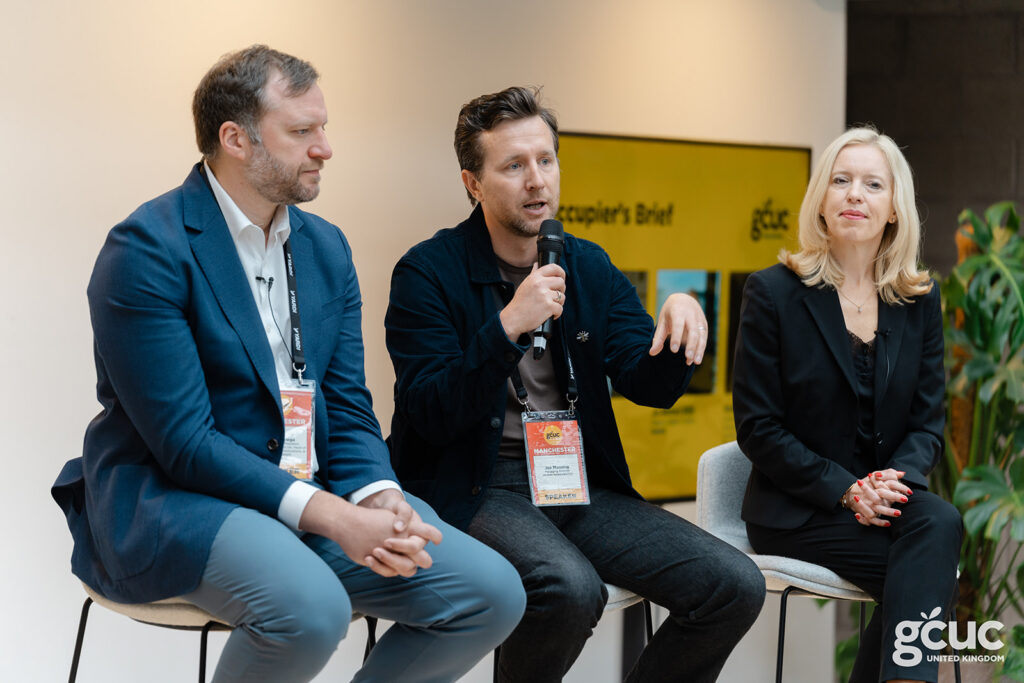
The conversation then turned to the occupiers themselves: three distinct businesses using flex workspace in entirely different ways.
Jo Ahmed walked through one of the UK’s largest corporate flex moves: Deloitte completely exiting a traditional, corporate office footprint in Spinningfields during the pandemic to try something deliberately unfamiliar:
“We thought, let’s try something completely different to that grey work environment, something that gave us flexibility to dial up and dial down.”
For a younger team, the overall feel and energy of the environment mattered just as much as the flexibility of the lease terms. It was an experiment so successful that Deloitte carried the elements that worked directly into its permanent home strategy.
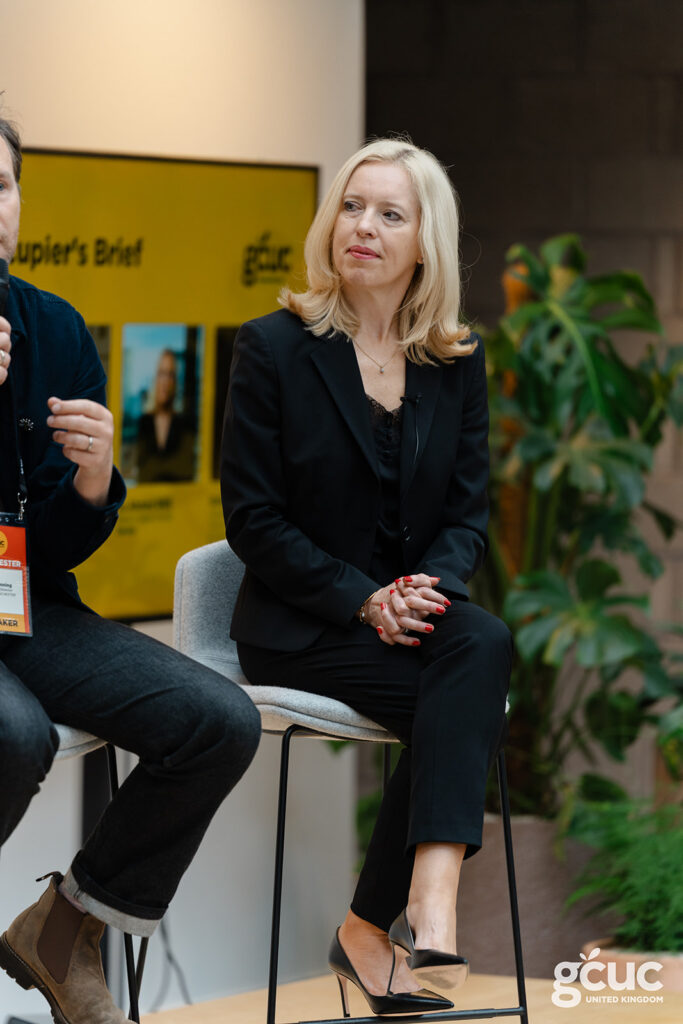
Matthew Polega came at the problem from the opposite end of the scaling spectrum. As the co-founder of a Chicago-born police software company, he was tasked with deciding exactly where to plant the business’s first UK flag. He expected to choose London. Instead he chose Manchester.
“I was sure I’d be in London. But the word I landed on for Manchester was positivity. People are kind, they take an interest in you.”
While proximity to his customer base was the initial priority, it was Manchester’s local tech talent and cultural welcome that kept the company actively growing there.
A fundamental shift
Joe Manning of Invest Manchester tied these threads together, describing how the foundational conversations around inward investment have fundamentally matured:
“The conversation has shifted from a finance department looking at desk cost into a much more nuanced conversation about workforce and people strategy.”
Neighbourhood dynamics, local culture, and city-centre liveability are no longer soft perks. They’re core components of the commercial pitch, and that can be directly tracked in commercial lease trends. Manning was clear that economic growth only truly counts if it structurally reaches the entire city, rather than just its prime postcodes.
The takeaway from the opening session was simple, and it effectively set the benchmark for everything that followed: the sector matures when it stops guessing and starts listening to the people who actually use the spaces it builds.
It’s a conversation we’ll be continuing at GCUC UK London, 8 & 9 October.